
Discovering effective, natural, and budget-friendly remedies for glowing skin and healthy hair is a timeless goal for beauty enthusiasts. Among the many natural ingredients found in every kitchen pantry, sodium bicarbonate stands out as one of the most versatile mineral compounds ever discovered. Exploring the practical beauty uses for baking soda reveals how this simple, eco-friendly ingredient can elevate your daily self-care routine—from clarifying stubborn scalp buildup to creating soothing facial cleansers and deep-polishing body scrubs.
When used with knowledge, proper technique, and balance, baking soda can replace dozens of synthetic, chemical-laden beauty products in your bathroom cabinet. In this ultimate guide, we explore the science behind sodium bicarbonate, step-by-step DIY formulas, dermatological safety guidelines, and expert-tested secrets to help you achieve radiant results at without spending a fortune on luxury spa treatments.
Medical & Dermatological Safety Disclaimer
Expertise & Editorial Integrity: The information in this comprehensive guide on beauty uses for baking soda is rigorously researched, synthesizing peer-reviewed dermatological studies, cosmetic chemistry principles, and real-world holistic beauty practices. Sodium bicarbonate (baking soda) is a versatile household mineral compound, but because of its alkaline nature (pH ~9.0), it must be used with precise formulation, correct dilution, and proper frequency.
Medical Disclaimer: The content provided here is for educational and informational purposes only and does not constitute formal medical or dermatological advice. Always perform a 24-hour patch test on your inner arm before applying remedies to your face or scalp, especially if you have sensitive skin, rosacea, or active eczema.
The Science of Sodium Bicarbonate: How Baking Soda Works on Skin & Hair
To truly understand why there are so many effective beauty uses for baking soda, it helps to examine its unique chemical profile. Baking soda (sodium bicarbonate, NaHCO₃) is a naturally occurring mineral salt that acts as a mild amphoteric compound. It is slightly alkaline with a typical pH level of around 8.3 to 9.0 when dissolved in water.
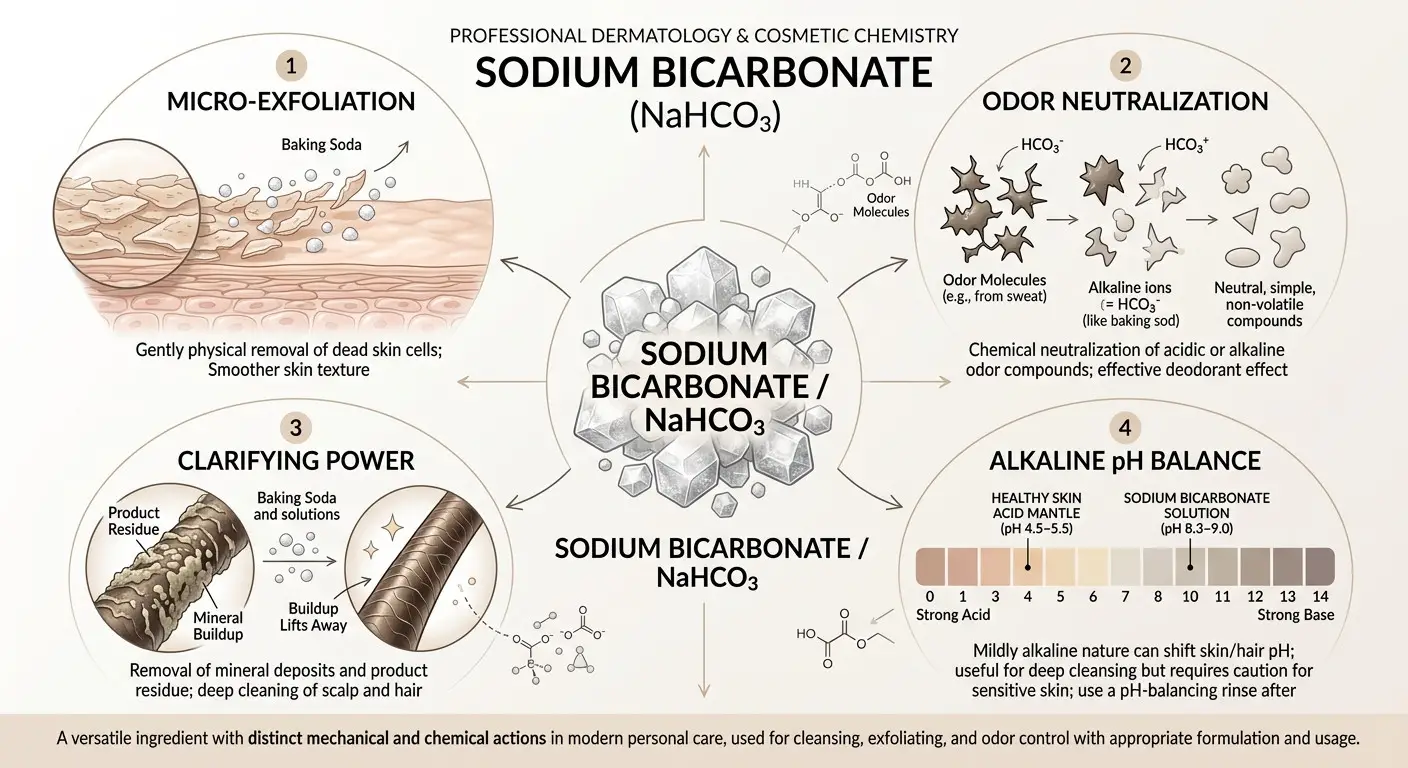
Here is why sodium bicarbonate is exceptionally functional in holistic personal care:
-
Micro-Exfoliating Structure: The fine crystalline structure of baking soda provides gentle mechanical abrasion. Unlike synthetic micro-beads or jagged fruit pit powders that can cause micro-tears on delicate tissue, refined sodium bicarbonate crystals dissolve slowly as you rub them, smoothing out roughness evenly.
-
Natural Acid Neutralizer & Odor Absorber: Baking soda neutralizes acidic compounds on contact. Sweat itself is relatively odorless, but bacteria on the skin feed on lipids and sweat components, creating acidic volatile compounds that generate body odor. Baking soda neutralizes these acids instantly.
-
Clarifying Power: Heavy hair products, silicone-based conditioners, and hard water minerals leave an invisible film on the hair shaft. Sodium bicarbonate breaks down these oily residues, lifting buildup cleanly from the scalp.
-
Antimicrobial Support: By temporarily altering the micro-environment on the skin, baking soda helps inhibit the proliferation of certain acne-causing bacteria like Cutibacterium acnes when used correctly as a spot rinse.
Comprehensive Quick-Reference Guide: Baking Soda Applications
Before diving into the detailed step-by-step recipes, here is an executive summary comparing the most popular applications, target benefits, recommended frequency, and ideal skin/hair types:
| Beauty Application | Primary Benefit | Ideal Frequency | Best Suited For |
| Baking Soda Face Wash & Scrub | Removes dead skin cells, unclogs pores, brightens skin | 1 time per week | Oily, acne-prone, or dull skin |
| Clarifying Hair & Scalp Rinse | Lifts product buildup, removes hard water residue | 1–2 times per month | Oily scalp, limp hair, product-heavy hair |
| Soothing Body & Foot Scrub | Smoothes rough elbows, knees, and cracked heels | 1–2 times per week | All skin types (body application) |
| Natural Deodorant Powder | Neutralizes odor-causing acids naturally | Daily (diluted) | Normal to non-sensitive underarm skin |
| Nail & Cuticle Brightener | Removes yellow stains from polish and softens cuticles | Once every 2 weeks | Stained or rough nails |

Understanding the Skin Barrier & Essential pH Balance Guidelines
While the numerous baking soda beauty benefits make it a favorite among natural beauty enthusiasts, maintaining healthy skin requires understanding pH dynamics. The human skin surface, known as the acid mantle, naturally maintains a slightly acidic pH between 4.5 and 5.5. This acidic environment protects the skin against pathogens, retains moisture, and supports natural enzyme activity.
Because sodium bicarbonate is mildly alkaline (pH ~8.5–9.0), using pure baking soda directly on the face every day without buffering can temporarily raise the skin’s pH. If the acid mantle is disrupted for too long, it may lead to dryness, irritation, or temporary redness. To maximize the baking soda skin care recipes while fully protecting your delicate skin barrier, always follow these dermatological golden rules:
-
Always Dilute or Buffer: Never apply raw, dry baking soda powder directly to dry facial skin. Combine it with carrier oils (such as jojoba or rosehip oil), honey, aloe vera gel, or plain water to cushion the application.
-
Follow with an Acidic Tone Adjuster: After using a baking soda treatment on your face or scalp, restore your natural pH by rinsing with a diluted Apple Cider Vinegar (ACV) toner (1 part raw ACV to 8 parts water) or an organic floral hydrosol.
-
Incorporate Soothing Essential Oils: Enhance the anti-inflammatory properties of your made treatments by incorporating high-quality botanical oils. For instance, pairing baking soda with soothing remedies like lavender essential oil for skin care helps soothe redness while providing a pleasant, calming scent experience.
-
Respect Your Skin Type: Those with oily or combination skin typically tolerate baking soda exfoliants very well when used once weekly. If you have extremely sensitive skin, reduce frequency to once every two to three weeks.
Pro-Tip for Maximum Results: For a complete head-to-toe pampering routine, alternate your baking soda facial treatments with luxurious body polishing routines. Check out our ultimate collection of 25 made body scrub recipes to keep your entire body velvety smooth and deeply hydrated year-round!
1. The Ultimate Baking Soda Face Wash and Scrub Recipe
Among the top beauty uses for baking soda, using it as a gentle exfoliating facial wash is renowned for instant clarity and smoothness. Over time, environmental pollution, residual makeup, and dead skin cells accumulate on the stratum corneum, making the complexion appear dull and tired. A gentle baking soda face wash and scrub lifts away these impurities to reveal fresh, glowing skin beneath.
Ingredients & Formulation Ratio:
-
1 Tablespoon: Premium organic sodium bicarbonate (aluminum-free)
-
1 Tablespoon: Organic raw honey (provides natural humectant moisture and antibacterial benefits)
-
1 Teaspoon: Pure jojoba oil or sweet almond oil (balances lipid levels)
-
2–3 Drops: Pure lavender essential oil (calms skin irritation)
Step-by-Step Application Guide:
-
In a clean glass bowl, combine the baking soda and raw honey. Stir until a smooth, velvety paste forms.
-
Add the jojoba oil and essential oil drops, blending thoroughly.
-
Cleanse your face with warm water to open up pores and loosen surface debris.
-
Gently apply the paste using soft, circular motions with your fingertips for 30 to 45 seconds. Avoid the sensitive eye area completely.
-
Rinse thoroughly with lukewarm water. Pat dry with a clean microfiber towel.
-
Apply a hydrating serum and your favorite moisturizer immediately to seal in moisture.
To learn more about the scientific literature regarding skin surface pH and exfoliation dynamics, explore authoritative research on dermatological barrier function and pH balance.
2. Clarifying Scalp & Hair Detox Rinse
When exploring the most effective beauty uses for baking soda, taking care of your hair and scalp is a top priority. Excess styling gels, dry shampoos, silicone-heavy conditioners, and mineral deposits from hard water can build up on your scalp over time. Incorporating these beauty uses for baking soda into your hair care routine acts as a powerful clarifying reset button.
Ingredients & Formulation Ratio:
-
1 Tablespoon: Pure sodium bicarbonate
-
1 Cup: Warm filtered water
-
1 Tablespoon: Raw unfiltered apple cider vinegar (for the post-rinse pH restore)
-
1 Cup: Cool water (to mix with the ACV)
Step-by-Step Application Guide:
-
Dissolve the baking soda completely in the warm filtered water until the solution is clear.
-
In a separate cup, dilute the raw apple cider vinegar with cool water.
-
Wet your hair thoroughly in the shower. Pour the baking soda solution slowly over your scalp.
-
Gently massage your scalp using the pads of your fingers for 1 to 2 minutes to lift away sebum and product buildup.
-
Rinse your hair completely with warm water.
-
Pour the diluted apple cider vinegar mixture over your hair as a final conditioning rinse to smooth the hair cuticle and restore optimum acidic pH.
-
Finish with a quick cool water rinse to lock in shine.
3. Deep-Cleansing Gentle Nose Pack for Blackheads
Blackheads occur when open pores become clogged. Among the top beauty uses for baking soda, creating a deep-cleansing nose pack is one of the quickest ways to clear sebaceous filaments. The mild micro-exfoliating nature of baking soda makes it exceptional at softening stubborn sebaceous filaments around the nose and chin.
Ingredients & Formulation Ratio:
-
1 Teaspoon: Baking soda
-
1 Teaspoon: Warm distilled water or organic rose water
-
2 Drops: Tea tree essential oil (optional, for targeted antibacterial support)
Step-by-Step Application Guide:
-
Combine the baking soda and distilled water in a small dish to form a thick, spreadable paste. Add the tea tree oil if desired.
-
Steam your face over a warm bowl of water or place a warm towel over your nose for 2 minutes to open the pores.
-
Apply the paste directly onto your nose, t-zone, or chin using gentle pressing motions.
-
Let the mixture rest on the target areas for 3 to 5 minutes (do not allow it to dry completely into a crust).
-
Massage in small circles for 20 seconds using light pressure.
-
Rinse thoroughly with warm water and follow immediately with a cooling hydrator like pure aloe vera gel.
4. DIY Soothing Exfoliating Foot Soak & Cracked Heel Treatment
Our feet carry us through every day, yet foot care is frequently overlooked. Hard calluses, rough heels, and tired soles respond rapidly to the softening properties of sodium bicarbonate. Among the most popular baking soda beauty benefits, a deep-softening foot soak stands out for delivering instant spa-quality results at .
Ingredients & Formulation Ratio:
-
3 Tablespoons: Baking soda
-
1/2 Cup: Epsom salt (magnesium sulfate for muscle tension relief)
-
1 Basin: Warm water (enough to cover ankles)
-
5 Drops: Peppermint or eucalyptus essential oil
Step-by-Step Application Guide:
-
Fill a foot tub or basin with comfortably warm water.
-
Add the baking soda and Epsom salt, stirring until fully dissolved. Drop in the peppermint essential oil.
-
Submerge your feet and soak for 15 to 20 minutes to deeply soften calloused tissue.
-
Prepare a thick paste made of 2 parts baking soda to 1 part water.
-
Remove one foot at a time and scrub your heels, calluses, and toes with the paste using a pumice stone or foot brush.
-
Rinse clean with cool water, dry thoroughly, and coat your feet generously with a rich foot cream or organic coconut oil before slipping on cotton socks overnight.
5. All-Natural Aluminum-Free Deodorant Paste
Testing different beauty uses for baking soda often leads people to natural body care. Commercial antiperspirants often contain synthetic fragrances, parabens, and aluminum compounds that block sweat glands. While sweating is a crucial biological detoxification process, body odor occurs when bacteria on the skin break down sweat lipids into acidic compounds. Baking soda effectively neutralizes these acids, preventing odor without blocking sweat production.
Ingredients & Formulation Ratio:
-
2 Tablespoons: Baking soda
-
3 Tablespoons: Organic arrowroot powder or cornstarch (absorbs moisture)
-
2 Tablespoons: Organic unrefined coconut oil (melted)
-
4 Drops: Organic lavender or tea tree essential oil
Step-by-Step Application Guide:
-
Whisk the baking soda and arrowroot powder together in a clean bowl.
-
Gradually pour in the melted coconut oil, stirring continuously until a creamy, smooth salve forms.
-
Blend in the essential oil drops.
-
Transfer the mixture to a small clean glass jar and allow it to solidify at room temperature.
-
To apply, scoop a dime-sized amount with clean fingers and gently smooth it onto clean, dry underarms.
6. Brightening Nail & Cuticle Polish Remover Treatment
Frequent use of dark nail polishes, gel manicures, and daily chores can leave fingernails looking yellowed, stained, and dull. Combining baking soda with natural citrus acids creates a gentle brightening paste that lifts stains while softening rough cuticles.
Ingredients & Formulation Ratio:
-
1 Tablespoon: Baking soda
-
1 Teaspoon: Freshly squeezed lemon juice
-
1 Teaspoon: Organic extra virgin olive oil
Step-by-Step Application Guide:
-
Mix the baking soda, fresh lemon juice, and olive oil in a small cup. The mixture will fizz slightly as the natural acid reacts with the bicarbonate base.
-
Dip a clean nail brush or soft toothbrush into the paste.
-
Gently buff each fingernail and surrounding cuticle area using light circular movements for 1 minute per hand.
-
Allow the paste to sit on your nails for 3 to 5 minutes to lift stubborn yellow oxidation.
-
Rinse thoroughly with warm water, pat dry, and apply a rich cuticle oil.
7. Natural Armpit & Bikini Line Brightening Paste
One of the lesser-known beauty uses for baking soda is gentle skin brightening in sensitive areas prone to friction hyperpigmentation. Hyperpigmentation around friction-prone areas like the underarms and inner thighs/bikini line can occur from frequent shaving, tight clothing, or buildup of dead skin cells. The gentle micro-exfoliation of sodium bicarbonate paired with soothing ingredients helps lift surface discoloration without aggressive chemical peels.
Ingredients & Formulation Ratio:
-
1 Tablespoon: Baking soda
-
1 Tablespoon: Organic aloe vera gel
-
1 Teaspoon: Raw cucumber juice or honey
Step-by-Step Application Guide:
-
Mix the baking soda with aloe vera gel and cucumber juice until it forms a soft, hydrating gel-paste.
-
Apply the mixture evenly over clean, dry underarms or along the bikini line (external application only).
-
Leave the pack on for 8 to 10 minutes to allow the enzymes and minerals to work.
-
Rinse gently with cold water using light circular movements.
-
Apply pure jojoba oil or a fragrance-free moisturizer immediately afterward.
8. Soothing Bath Soak for Irritated Skin & Sunburn Relief
If you are looking for relaxing beauty uses for baking soda, a soothing mineral bath treatment provides instant relief for dry or sunburned skin. When your skin feels overheated from excessive sun exposure, insect bites, or seasonal dryness, a lukewarm baking soda bath offers immediate comfort. It helps neutralize surface acids, calms inflammation, and softens hard bathwater.
Ingredients & Formulation Ratio:
-
1 Cup: Pure baking soda
-
1 Cup: Finely ground colloidal oatmeal
-
5 Drops: Roman chamomile or lavender essential oil
Step-by-Step Application Guide:
-
Fill your bathtub with warm to lukewarm water (avoid hot water, as it strips natural skin lipids).
-
Pour the baking soda and colloidal oatmeal under running tap water to ensure complete dissolution.
-
Swirl in the essential oil drops.
-
Soak in the bath for 15 to 20 minutes, gently pressing the milky water against sensitive skin.
-
Pat yourself dry gently with a soft towel without rubbing, and apply a soothing body lotion within 3 minutes of stepping out.
9. Gentle Makeup Brush Clarifying Cleanser
Practical beauty uses for baking soda extend beyond direct skin application to tool hygiene. Cleansing your makeup brushes with sodium bicarbonate removes build-up effortlessly. Derm-approved hygiene requires washing your makeup brushes regularly. Oil, foundation pigments, and dead skin accumulate rapidly on brush bristles, creating a breeding ground for acne-causing bacteria. Baking soda breaks down oil-based cosmetic waxes while deodorizing synthetic and natural brush fibers.
Ingredients & Formulation Ratio:
-
2 Tablespoons: Baking soda
-
1 Cup: Warm water
-
1 Teaspoon: Gentle baby shampoo or Castile soap
Step-by-Step Application Guide:
-
In a tall glass or bowl, dissolve the baking soda and gentle liquid soap in warm water.
-
Swirl the bristles of your makeup brushes in the mixture for 30 seconds (keep the brush ferrules and glue joints above water).
-
Allow the bristles to soak for 5 minutes.
-
Rinse thoroughly under lukewarm running water until the water runs completely clear.
-
Reshape the bristles and lay the brushes flat on a dry towel tilted slightly downward to dry.
10. Natural Teeth Brightening & Stain Remover Rinse
While baking soda should never replace regular fluoride toothpaste for long-term enamel care, its gentle polishing texture makes it highly effective for lifting surface coffee, tea, and red wine stains when used occasionally.
Ingredients & Formulation Ratio:
-
1/2 Teaspoon: Baking soda
-
1/2 Glass: Warm water
-
1 Drop: Organic peppermint essential oil
Step-by-Step Application Guide:
-
Dissolve the baking soda in warm water and stir in the peppermint oil.
-
Swish the solution in your mouth for 45 to 60 seconds, ensuring it covers all teeth surfaces.
-
Alternatively, wet your toothbrush, dip the tip lightly into baking soda, and brush gently for 1 minute (apply minimal pressure).
-
Spit out the solution and rinse thoroughly with clear water.
-
Limit this routine to once every two weeks to preserve natural tooth enamel.
11. DIY Scalp Refreshing Dry Shampoo Powder
Among all the versatile beauty uses for baking soda, making a quick dry shampoo powder is a lifesaver for busy mornings. On busy days when you don’t have time for a full wet wash, excess sebum can make roots look flat and oily. A custom dry shampoo powder featuring baking soda absorbs oils and odors at the root while adding natural volume.
Ingredients & Formulation Ratio:
-
1 Tablespoon: Baking soda
-
3 Tablespoons: Arrowroot powder or cornstarch
-
1 Tablespoon: Unsweetened cocoa powder (for dark hair) or white kaolin clay (for blonde/light hair)
Step-by-Step Application Guide:
-
Combine the baking soda, arrowroot powder, and color-matching agent (cocoa powder or kaolin clay) in a small container.
-
Dip a clean, fluffy blush brush into the powder mixture and tap off any excess.
-
Section your hair and dab the brush lightly onto oily roots and parting lines.
-
Allow the powder to absorb oils for 2 minutes.
-
Massage your scalp thoroughly with your fingertips, then brush through your hair from roots to ends to remove any excess powder.
Dermatological Safety Rules & Storage Guidelines
To ensure your recipes remain fresh, potent, and safe for regular use, follow these standard storage and handling principles:
-
Always Store in Glass Containers: Sodium bicarbonate can react over time with cheap plastics. Keep your dry mixes and creams in clean glass jars with airtight lids.
-
Keep Away from Moisture: Store your raw ingredients in a cool, dry pantry rather than directly inside a humid shower stall to prevent clumping.
-
Fresh Batch Principle: Because these recipes do not contain synthetic chemical preservatives, prepare small batches intended for immediate use or store liquid pastes in the refrigerator for no longer than 3 to 5 days.
Frequently Asked Questions (FAQ)
Can I use baking soda on my face every single day?
When researching various beauty uses for baking soda, daily facial use is often debated. However, using it on your skin every day is not recommended by dermatologists due to its alkaline pH. Baking soda has an alkaline pH of around 8.3 to 9.0, daily application can strip away the natural lipidic mantle and alter your skin’s acid balance. Limit facial application to once per week and always pair it with soothing hydration like aloe vera or a natural carrier oil.
Is baking soda safe for color-treated hair?
Baking soda acts as a deep clarifying cleanser, which means it can strip away residual dyes and synthetic color coatings. If you have freshly colored or bleached hair, avoid using baking soda rinses, as they may cause your hair color to fade faster. Stick to sulfate-free color-safe cleansers instead.
What is the difference between baking soda and baking powder?
While they sound similar, they are chemically distinct. Baking soda is pure 100% sodium bicarbonate. Baking powder contains sodium bicarbonate combined with an added dry acid (like cream of tartar) and cornstarch. Never substitute baking powder in your DIY skin care recipes, as the added acid components can cause skin reactions.
How do I know if my skin is reacting poorly to baking soda?
If your skin surface turns red, feels unusually tight, burns, or develops small bumps after an application, rinse immediately with lukewarm water. Discontinue use and apply a basic soothing moisturizer or pure jojoba oil. Always perform a patch test on your inner arm 24 hours before trying any treatment.
Can baking soda permanently cure acne or blackheads?
While sodium bicarbonate helps clear surface impurities, excess sebum, and dead skin cells, it is not a cure for chronic medical acne. Persistent acne is often driven by hormones, internal inflammation, and genetics. Baking soda serves as a temporary deep-cleansing tool rather than a replacement for dermatological acne therapy.
Final Thoughts: Embracing Natural Beauty with Balance
Unlocking the full potential of beauty uses for baking soda allows you to streamline your personal care routine, minimize chemical exposure, and achieve glowing results on a budget. From clarifying stubborn hair product residue to smoothing rough feet and brightening dull skin, sodium bicarbonate remains an unmatched staple in holistic beauty practices.
The secret to success lies in balance, proper formulation ratios, and respecting your body’s natural pH limits. By following the detailed recipes, buffering your applications with nourishing oils, and honoring safe usage frequencies, you can safely enjoy all the transformative benefits this simple mineral compound has to offer.

Lora Sokolov is a Lead Cosmetic Formulation Expert and skincare strategist at My Beauty Box Review, specializing in dermo-cosmetics, active ingredient analysis, and skin barrier recovery.

