
Exploring the most useful peppermint oil uses in bath and beauty routines can be a refreshing way to add a cooling, aromatic ingredient to homemade skincare and hair-care formulas. Peppermint essential oil (Mentha piperita) contains menthol, a compound known for activating cold-sensitive TRPM8 receptors and creating the characteristic cooling sensation associated with peppermint.
However, using peppermint essential oil safely requires careful dilution and appropriate formulation. Applying undiluted essential oil directly to the skin, adding it straight to bathwater, or ingesting it without appropriate professional guidance can increase the risk of irritation and other adverse effects.
In this guide, we’ll look at practical peppermint oil uses for bath, body, scalp, and household applications, explain basic dilution principles, and share simple DIY ideas with a stronger focus on safe formulation and realistic cosmetic claims.
The Cosmetic Science of Menthol: Micro-Circulation & The Sensory Barrier
To understand why essential oils are so effective in topical formulations, we must analyze how L-menthol interacts with human skin receptors. When applied topically, menthol binds selectively to the TRPM8 receptor (Transient Receptor Potential Melastatin 8), the primary cold-sensing ion channel in epidermal nerve endings.
Menthol activates TRPM8, a cold-sensitive receptor involved in the sensation of cooling. This helps explain why peppermint oil produces its characteristic cooling and tingling sensation when properly diluted. Research on menthol and essential oils also explores effects on sensory nerves and blood vessels, but these mechanisms should not be interpreted as proof that peppermint oil improves hair growth or treats a medical condition.
According to research indexed by the National Center for Biotechnology Information (NCBI), Menthol interacts with sensory receptors in the skin, which is one reason peppermint produces such a pronounced cooling sensation.
When formulating home remedies, combining essential oils with gentle exfoliating bases creates a balanced spa-like experience. For a complete guide on clarifying surface skin with household minerals, explore our analysis of the top beauty uses for baking soda.
Practical Peppermint Essential Oil Dilution Guide
Understanding proper concentration ratios is the most vital step when exploring various peppermint oil uses for bath and body formulations. Essential oils are highly volatile chemical concentrates that must always be suspended in an appropriate lipid-based carrier oil (such as jojoba, sweet almond, or fractionated coconut oil) or an emulsifying bath base.
Never drop raw essential oils directly into plain bathwater. Because oil and water do not mix, neat peppermint oil floats on top of the water and adheres directly to bare skin, causing intense chemical stinging and thermal discomfort.
Clinical Topical Dilution Matrix
| Application | Practical Starting Range | Example for 30 ml Carrier | Important Note |
|---|---|---|---|
| Face & sensitive areas | 0.5% or lower | About 4 drops* | Start low and avoid eyes and lips |
| Scalp & hair products | 1% | About 9 drops* | Patch test first and stop if irritation occurs |
| Body oils & lotions | 1–2% | About 9–18 drops* | Use on intact skin only |
| Bath & wash-off products | Formulate with a suitable dispersing base | Depends on the finished product | Do not add essential oil directly to bathwater |
*Drop counts are approximate. For more accurate formulation, calculate concentration by weight rather than relying on drops.
These are general starting points, not universal medical safety limits. Individual tolerance varies, and some products require different concentrations depending on their intended use and complete formulation.
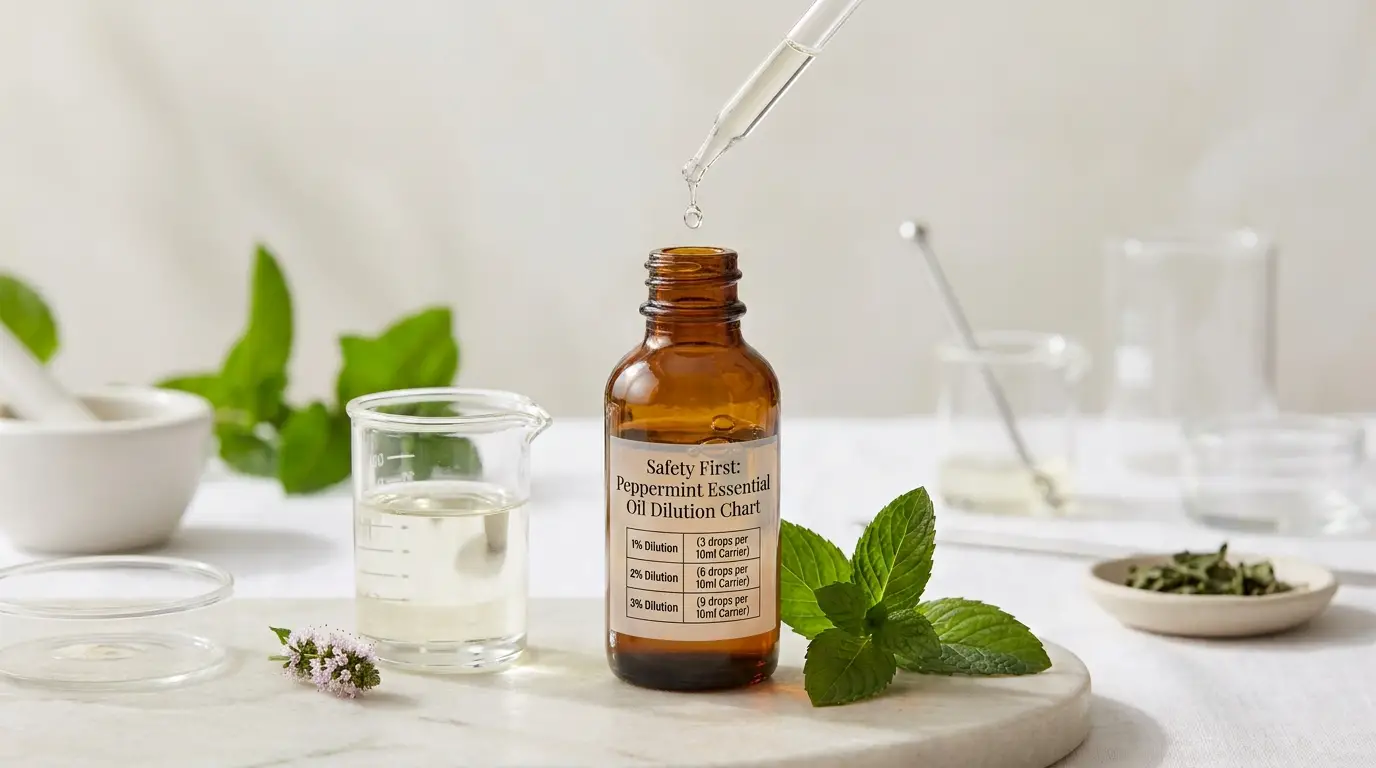
Proper essential oil dilution ratios to prevent cutaneous irritation and chemical burns.
When building custom aromatherapy routines, blending peppermint with calming botanicals creates a well-rounded sensory profile.
Preventing Irritation: Side Effects of Peppermint Oil on Skin
Before trying any DIY formula, you must understand the potential side effects of peppermint oil on skin tissues. Menthol is a recognized cosmetic allergen that can cause severe localized reactions if used at unsafe concentrations or on compromised skin barriers. If your skin is already irritated, over-exfoliated, or unusually sensitive, it’s better to prioritize barrier support before introducing essential oils. See our skin barrier repair guide for a step-by-step approach to rebuilding a gentle skincare routine.
Common Adverse Reactions:
-
Contact Dermatitis & Chemical Stinging: Applying undiluted peppermint oil leads to immediate burning, severe flushing (erythema), and allergic contact dermatitis.
-
Mucous Membrane Irritation: Vapor fumes from high concentrations of menthol can cause tearing, corneal burning, and nasal sting if applied too close to the eyes or nostrils.
-
Barrier Dysfunction on Sensitive Skin: Persons with eczema, rosacea, or active perioral dermatitis can experience severe flare-ups due to menthol-induced vasodilation.
-
Toxic Ingestion Risks: Adding essential oils to drinking water or tea is extremely dangerous. Essential oils do not dissolve in water and can cause internal mucosal burns and toxic gastrointestinal distress.
If severe stinging occurs, do not wash the area with water alone, as water cannot dissolve essential oils. Instead, saturate a cotton pad with a bland vegetable or carrier oil (like olive or jojoba oil) and wipe the area clean to lift the essential oil off the skin before rinsing with mild soap.
The 10 Best Bath and Beauty Peppermint Oil Uses
When properly diluted in lipid carriers or suitable emulsifying bases, high-purity peppermint oil serves as an invigorating multi-tasking ingredient. Here are the 10 most effective peppermint oil uses for hair, skin, and bath formulations.
1. Peppermint Oil for Scalp and Hair Care
Using peppermint oil for scalp and hair care is a popular DIY approach because peppermint creates a noticeable cooling sensation on the scalp. Some research has also investigated peppermint oil and hair growth, but the evidence should be interpreted cautiously.
A 2014 study found that topical 3% peppermint oil promoted hair growth in mice over four weeks. However, this was an animal study, so the results cannot be assumed to demonstrate the same effect in humans.
For a cosmetic scalp treatment, peppermint oil is better presented as a refreshing, aromatic ingredient rather than as a proven treatment for hair loss.
2. Exfoliating DIY Peppermint Oil Lip Scrub Recipe
Formulating a diy peppermint oil lip scrub recipe helps remove dry, dead epidermal flakes while providing a temporary, natural lip-plumping effect through gentle menthol-induced capillary dilation.
3. Invigorating Epsom Salt Bath Soaks
Adding properly emulsified peppermint oil to an Epsom salt (magnesium sulfate) bath helps ease muscle fatigue, refresh tired limbs, and promote post-workout physical recovery.
4. Cooling Foot Scrub for Callus Reduction
Combining coarse sugar, nourishing plant oils, and peppermint essential oil creates a deep-exfoliating foot treatment that eliminates odor-causing bacteria and softens thick heel calluses.
5. Aromatherapy Shower Steamer Bombs
Placing menthol-infused shower steamers on the shower floor releases volatile eucalyptus and peppermint vapors that dissolve under hot water, creating a strong, refreshing aromatic experience during a warm shower. and clearing morning mental fatigue.
6. Quick DIY Chest Vapor Rub
Mixing peppermint, eucalyptus, and lavender essential oils into solid coconut oil provides refreshing aromatic chest balm without petrolatum or artificial preservatives.
7. Natural Volumizing Dry Shampoo
Combining arrowroot powder, cocoa powder, and peppermint essential oil absorbs excess scalp sebum while leaving hair smelling fresh and lifted at the roots.
8. DIY Peppermint Bathroom Odor Spray
Blending peppermint oil with lemongrass oil and rubbing alcohol creates an effective surface-tension barrier spray over toilet water, trapping unwanted bathroom odors before they escape.
9. Tingling Body Lotion Booster
Use a properly diluted, pre-formulated peppermint body oil or lotion rather than adding essential oil directly to a single portion of moisturizer.
10. Fizzy Clarifying Toilet & Bath Bombs
Using citric acid, baking soda, and peppermint oil creates multipurpose fizzy tablets that can clean bathroom ceramics or double as a decongestant bath fizz when combined with a suitable dispersant.
DIY Peppermint Scalp Oil: A Gentle 1% Formula
This simple scalp oil is designed as a refreshing cosmetic treatment rather than a proven hair-growth treatment. The formula uses a low peppermint concentration in a carrier oil to create a cooling scalp-care experience while minimizing unnecessary exposure to concentrated essential oil.

Ingredients & Equipment:
-
Carrier Base: 30 ml (1 oz) Jojoba Oil or Argan Oil.
-
Essential Oil: 6 drops Pure Peppermint Essential Oil (1% dilution ratio).
-
Application Tool: Glass dropper bottle.
Step-by-Step Scalp Protocol:
-
Prepare the Formula: Pour 30 ml of jojoba oil into a clean dropper bottle and add exactly 6 drops of peppermint oil. Shake well to distribute evenly.
-
Section Hair: Part your hair into 4 distinct sections to expose the scalp surface.
-
Apply & Massage: Apply 2–3 drops along each parting line. Use your fingertips (not nails) to massage the oil in circular motions for 5 minutes to stimulate blood flow.
-
Dwell Time: Leave the treatment on your scalp for 20 to 30 minutes. You will experience a pleasant, cooling tingle.
-
Rinse & Shampoo: Wash thoroughly with a mild shampoo to remove all residual oil. Repeat 1–2 times per week.
Additional DIY Beauty & Household Recipes
1. Instant DIY Chest Vapor Rub
-
1 tbsp (15 ml) Unrefined Coconut Oil
-
3 drops Eucalyptus Essential Oil
-
3 drops Peppermint Essential Oil
-
2 drops Lavender Essential Oil
Directions: Soften the coconut oil between your hands, blend in the essential oils, and massage gently onto the upper chest and throat area for instant aromatic congestion support.
2. DIY Natural Dry Shampoo Powder
-
¼ cup Arrowroot Powder (for blonde hair) OR 2 tbsp Arrowroot + 2 tbsp Dark Cocoa Powder (for brunette/dark hair)
-
2 drops Peppermint Essential Oil
-
2 drops Rosemary Essential Oil
Directions: Combine ingredients in a food processor or spice grinder to distribute the essential oils evenly. Apply to oily roots using a clean powder brush, leave for 2 minutes, and brush out thoroughly.
Advanced DIY Formulations: Bath, Body & Household Essentials
Expanding your library of peppermint oil uses allows you to substitute synthetic household products with clean, customizable home formulations.
1. Stuffy Shower Soother Steamers
-
1 cup Baking Soda
-
⅓ cup Pure Water (to moisten)
-
5 drops Peppermint Essential Oil
-
5 drops Eucalyptus Essential Oil
-
5 drops Rosemary Essential Oil
Formulation Method: Mix baking soda with water until a wet-sand texture is achieved. Press the mixture firmly into silicone muffin molds. Add 15 total drops of essential oils evenly across the molds. Allow to dry overnight. Place one tablet on the shower floor away from the direct water stream to release aromatic vapors during warm showers.
2. DIY Toilet Air Freshener Spray (Poo-Pourri Alternative)
-
1 tsp Rubbing Alcohol (91% Isopropyl Alcohol)
-
20 drops Peppermint Essential Oil
-
20 drops Lemongrass Essential Oil
-
80 ml Distilled Water
Formulation Method: Combine the alcohol and essential oils inside a 3 oz spray bottle. The alcohol acts as a solvent, dispersing the oils. Add water and shake vigorously before each use. Spray 3–5 squirts directly onto toilet bowl water before use to create an oil barrier that traps trapped odors underneath.
3. Cooling Peppermint Foot & Heel Scrub
-
1 cup Granulated Sugar or Sea Salt
-
⅓ cup Cold-Pressed Olive Oil or Sweet Almond Oil
-
10 drops Peppermint Essential Oil
Formulation Method: Blend sugar and olive oil in a wide-mouth glass container. Stir in peppermint oil. Rub a generous tablespoon onto wet, rough feet using firm circular motions, focusing on calloused heels. Rinse with warm water.
4. Energizing Bath Salts
-
2 cups Pure Epsom Salt (Magnesium Sulfate)
-
4 tbsp Baking Soda
-
1 tbsp Carrier Oil (Jojoba or Fractionated Coconut Oil)
-
6 drops Peppermint Essential Oil
Formulation Method: Pre-mix the peppermint essential oil into the carrier oil first to ensure proper dispersal. Stir the oil mix into the Epsom salt and baking soda. Dissolve ½ cup under warm running bath water for a relaxing, muscle-soothing soak.
5. Multi-Purpose Fizzy Toilet & Bath Bombs
-
1 ⅓ cups Baking Soda
-
½ cup Citric Acid
-
1 tsp Carrier Oil
-
15 drops Peppermint Essential Oil
-
15 drops Lavender Essential Oil
-
15 drops Lemon Essential Oil
-
Water in a spray bottle (for dampening)
Formulation Method: Whisk baking soda and citric acid together in a glass bowl. Pre-blend essential oils into the carrier oil and fold into the dry powder. Lightly spritz with water while stirring until the powder holds shape when squeezed. Press firmly into silicone molds and allow to harden for 24 hours.
Comparative Matrix: Peppermint vs. Other Essential Oils
Understanding how different essential oils compare helps you choose the correct botanical for your specific skincare and wellness targets.
| Essential Oil | Active Key Botanical | Primary Benefit | Ideal Skin/Hair Target | Safety Warning |
| Peppermint Oil | L-Menthol | Vasodilation & Cooling | Scalp Growth & Foot Care | Can burn delicate mucosal tissues |
| Lavender Oil | Linalool & Linalyl Acetate | Calming & Barrier Repair | Irritated & Sensitive Skin | Low risk, but can cause contact allergy |
| Tea Tree Oil | Terpinen-4-ol | Antimicrobial & Antifungal | Active Acne & Scalp Clarity | Drying; must be diluted below 2% |
| Rosemary Oil | 1,8-Cineole & Camphor | Follicle Activation | Hair Thinning & Density | High cineole can irritate sensitive scalps |
Frequently Asked Questions (FAQ)
What are the safest peppermint oil uses for sensitive skin?
The safest peppermint oil uses for sensitive skin involve ultra-low dilutions (0.25% to 0.5%) always suspended in rich carrier oils like jojoba or squalane. Never apply raw essential oils directly to the face, and always perform a 24-hour patch test on your inner arm prior to full application.
Does peppermint oil promote hair growth?
Peppermint oil has been investigated for hair growth, including a 2014 study in mice in which topical 3% peppermint oil was associated with increased hair growth over four weeks. However, animal findings do not establish that peppermint oil promotes hair growth in humans. More human research would be needed before treating peppermint oil as a proven hair-loss treatment.
Can I double the essential oil in my diy peppermint oil lip scrub recipe?
No. You should never increase the concentration in a diy peppermint oil lip scrub recipe. Lip tissue is thin and lacks protective outer dermal layers. Using more than 1 drop of peppermint oil per tablespoon of base can cause severe chemical burning, persistent numbness, and swelling.
What should I consider when choosing a peppermint oil dilution?
Dilution depends on the intended use, the area of application, the finished product, and individual skin sensitivity. General essential-oil guidance commonly uses lower concentrations for facial or sensitive-skin applications and higher ranges for body products, but there is no single concentration that is appropriate for every formula. Drop counts are also approximate because drop size varies between bottles and oils.
What should I do if peppermint oil irritates my skin?
Stop using the product and remove the source of exposure. Essential oils can cause irritation or allergic reactions, including redness, burning, itching, or pain. If symptoms are severe, persistent, involve the eyes, or cause significant swelling or breathing difficulties, seek appropriate medical advice.
Final Verdict: The Best Peppermint Oil Uses for a Safer DIY Routine
Peppermint essential oil can be a useful ingredient in bath, body, scalp, and household formulations when it is properly diluted and used for the right purpose. Its strongest cosmetic appeal is the distinctive cooling, refreshing sensation created by menthol.
Some research has explored peppermint oil and hair growth, but the evidence is still limited and includes animal research rather than strong human clinical evidence. It is therefore better to treat peppermint oil as a cosmetic and sensory ingredient rather than a proven treatment for hair loss.
The most important rule is simple: more essential oil does not necessarily mean better results. Use appropriate dilution, avoid applying undiluted oil to the skin, never add essential oil directly to bathwater, and stop using a formula if it causes burning, redness, itching, or other adverse reactions.
Used thoughtfully, peppermint oil can add a refreshing botanical element to a DIY beauty routine without relying on exaggerated claims.
The My Beauty Box Review editorial team writes about DIY skincare, beauty subscription boxes and clean beauty. We link our sources and include safety notes. We are not dermatologists or cosmetic chemists.

