
Discover practical melaleuca oil uses for skincare, scalp care, and simple DIY beauty routines. Also known as tea tree oil, this essential oil is steam-distilled from the leaves of Melaleuca alternifolia and contains terpinen-4-ol among its major constituents.
Tea tree oil has been studied for several topical uses, particularly acne, but the clinical evidence is still developing. Current research suggests that properly formulated topical tea tree oil may help reduce acne severity, while irritation and allergic reactions remain important safety considerations.
In this guide, we’ll explore practical melaleuca oil uses, explain how to dilute tea tree oil for cosmetic applications, and show how to approach DIY formulas without treating an essential oil as a substitute for medical care.
What Is Melaleuca Oil? Understanding Tea Tree Oil
Tea tree oil has a long history of traditional use in Australia, and modern research has investigated its antimicrobial and anti-inflammatory properties. One of its major constituents is terpinen-4-ol, although the complete chemical profile of tea tree oil varies between products.
Clinical evidence is most developed for certain topical applications, particularly acne, but tea tree oil should not be presented as a universal treatment for skin or scalp conditions. Its effects also depend on concentration, formulation, product quality, and individual skin tolerance.
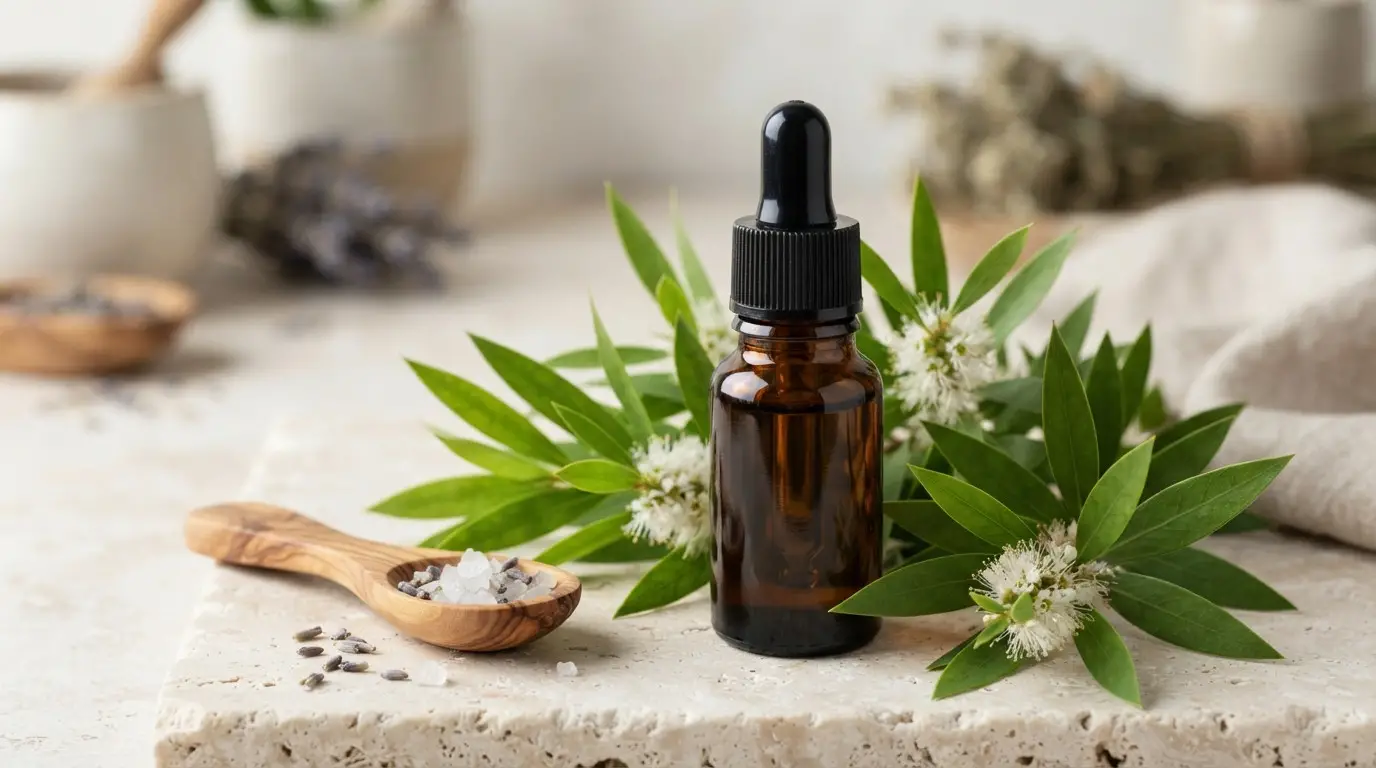
Melaleuca Oil for Acne: What the Evidence Says
Tea tree oil is one of the more studied essential oils for acne, although the evidence is still more limited than for established acne treatments. Clinical studies have investigated topical tea tree oil preparations for mild to moderate acne, and a 2026 systematic review found a modest reduction in acne severity across seven studies involving 445 participants.
The evidence does not mean that pure tea tree oil should be applied directly to the skin. Most clinical research has involved specific formulated products rather than homemade essential-oil mixtures. Irritation, dryness, burning, and allergic reactions are also possible.
For that reason, a properly formulated tea tree product is preferable to applying undiluted essential oil to individual blemishes.
How to Use Tea Tree Oil for Blemish-Prone Skin
For DIY skincare, avoid applying undiluted tea tree oil directly to a blemish. A lower-concentration cosmetic formula is a more conservative approach, particularly if your skin is sensitive or already irritated.
If you want to use tea tree oil as part of an acne routine, consider a commercially formulated product with a clearly stated concentration rather than estimating the strength of a homemade mixture by counting drops.
Tea tree oil should also not replace evidence-based acne treatment when breakouts are persistent, painful, widespread, or leaving scars.

Unlocking Essential Oils for Skin Care: Balancing Oily Complexions
Beyond treating acute breakouts, integrating specialized essential oils for skin care helps regulate excessive sebum production. Oily skin often overproduces oil because it is dehydrated underneath.
Melaleuca oil helps normalize skin oil output while providing lightweight antimicrobial defense. When combined with gentle carrier oils, it leaves the skin feeling clean, refreshed, and balanced without a greasy residue.
Crafting the Ultimate DIY All Purpose Salve
One of the most rewarding aspects of utilizing diverse melaleuca oil uses is formulating your own herbal remedies at home. Commercial balms and ointments frequently contain petroleum jelly byproducts, artificial fragrances, and synthetic preservatives that can trap impurities. Creating a DIY all purpose salve ensures 100% control over the ingredients, providing a deeply nourishing barrier balm for minor scrapes, bug bites, dry cuticles, and irritated elbows.
DIY All-Purpose Tea Tree Body Balm
A simple tea tree body balm can be used as a cosmetic moisturizer for areas that feel dry or rough, such as elbows, heels, and cuticles. Because homemade formulas do not undergo the same stability and safety testing as commercial cosmetics, make small batches and use clean equipment and containers.
-
Ingredients:
-
1/2 cup of organic unrefined coconut oil (or olive oil for a softer texture)
-
2 tablespoons of cosmetic-grade beeswax pellets
-
15 drops of pure melaleuca (tea tree) essential oil
-
10 drops of lavender or chamomile essential oil (for enhanced calming benefits)
-
1 teaspoon of pure vitamin E oil (antioxidant that can help slow oxidation of oils)
-
-
Instructions:
-
Melt the Base: Set up a double boiler on low heat. Combine the coconut oil and beeswax pellets in a heat-safe glass measuring cup, stirring gently until completely melted into a uniform liquid.
-
Cool Slightly: Remove the mixture from the heat source and let it cool for 3 to 5 minutes so it does not degrade the volatile active compounds of the essential oils.
-
Blend Actives: Stir in the melaleuca oil, lavender oil, and vitamin E oil until thoroughly incorporated.
-
Pour and Set: Pour the warm liquid directly into a clean, sterilized amber glass tin or jar. Allow it to sit undisturbed at room temperature until it solidifies completely (approx. 30 to 45 minutes). Seal tightly and store in a cool drawer.
-
Tea Tree Oil for Scalp Care and Flakiness
Tea tree oil is also used in cosmetic scalp products designed for oily, flaky, or buildup-prone scalps. Some research has investigated tea tree oil in scalp and dandruff-related formulations, but it should not be presented as a proven treatment for every scalp condition or as a hair-growth treatment.
For DIY use, a properly diluted formula is preferable to applying pure essential oil directly to the scalp. Stop using the product if it causes burning, itching, redness, or increased flaking.
Targeted Scalp Clarifying Treatment Routine:
-
The Mixture: Combine 3 drops of pure melaleuca oil with 2 tablespoons of a lightweight carrier oil like jojoba or sweet almond oil.
-
Application: Part your hair into small sections and massage the oil blend directly into your scalp using circular fingertip motions.
-
Processing Time: Leave the treatment on for 15 to 20 minutes before stepping into the shower.
-
Cleansing: Apply your shampoo directly to the oiled hair before wetting it—this emulsifies the carrier oil instantly, making it effortless to rinse out completely without leaving a greasy film.
Natural Deodorizer and Antimicrobial Household Applications
The purifying capabilities of tea tree extract extend far beyond personal grooming, reinforcing why understanding broad melaleuca oil uses creates a holistic lifestyle. Because volatile terpene compounds Tea tree oil has a strong aromatic profile and antimicrobial activity that has been studied in laboratory settings, making it a popular ingredient in homemade deodorizing formulas.
-
Natural Underarm Refresh: Mix a few drops of tea tree oil with witch hazel and distilled water in a glass spray bottle for a clean, chemical-free body mist.
-
Foot and Shoe Refreshing Spritz: Combat stubborn shoe odors by blending melaleuca oil with peppermint oil and water, misting athletic shoes overnight.
What Makes Tea Tree Oil Different?
Tea tree oil contains a mixture of naturally occurring compounds, with terpinen-4-ol among its major constituents. Other components include γ-terpinene, α-terpinene, 1,8-cineole, α-terpineol, p-cymene, and α-pinene.
The exact composition varies between oils, which is one reason product quality, freshness, storage, and formulation matter when using tea tree oil in DIY cosmetics.
Quality Control Checklist: Choosing Pure Melaleuca Oil
When formulating your homemade products and exploring various melaleuca oil uses, product purity dictates efficacy. Always verify the following parameters on the label:
-
Botanical Name: Ensure Melaleuca alternifolia is explicitly stated.
-
Extraction Method: Look for 100% pure steam-distilled essential oil.
-
Packaging: High-grade essential oils must always be bottled in dark amber or cobalt glass to protect volatile compounds from degrading UV light.
Tea Tree Oil Safety and Dilution Guidelines
Tea tree oil is highly concentrated and should not be applied undiluted to the skin. The appropriate concentration depends on the product, application area, formulation, and individual sensitivity.
For facial and sensitive-skin products, lower concentrations are generally the more conservative starting point. Body products can use different concentrations depending on the finished formula, but there is no single dilution percentage that is safe for every person or every application.
Tea tree oil can cause irritation or allergic contact dermatitis, and oxidation may increase its sensitizing potential. Store it tightly closed, away from excessive heat and light, and follow the manufacturer’s shelf-life guidance.
A patch test can provide useful information about individual tolerance, but it cannot guarantee that a product will never cause irritation or allergy. Stop using the product if you develop burning, itching, redness, swelling, or other concerning symptoms.
If your skin is already dry, irritated, or over-exfoliated, adding essential oils may not be the best next step. Our skin barrier repair guide explains how to simplify a routine and support compromised skin before reintroducing potentially irritating ingredients.
Common Mistakes to Avoid When Using Melaleuca Oil
Even experienced holistic enthusiasts can encounter setbacks if botanical extracts are handled incorrectly. To ensure maximum safety and efficiency while exploring diverse melaleuca oil uses, steer clear of these frequent pitfalls:
-
Applying Undiluted Oil Directly to the Face: The most common mistake is applying pure, un-fractionated tea tree oil straight from the bottle onto blemishes. Because it is highly potent, direct application can trigger irritation, burning, or allergic contact dermatitis, severe contact dermatitis, or localized peeling. Always use a proper carrier oil.
-
Neglecting the 24-Hour Patch Test: Assuming that natural plant extracts are automatically hypoallergenic is a recipe for irritation. Always perform a patch test on the inner forearm before adopting any new DIY blend into your daily regimen.
-
Improper Storage in Sunlight: Storing your essential oils on a sunny windowsill causes the active monoterpenes and beneficial compounds to oxidize rapidly due to UV exposure, rendering the oil ineffective.
Frequently Asked Questions (FAQ)
Can I apply melaleuca oil directly to my skin?
It is best to avoid applying undiluted tea tree oil directly to the skin. Pure essential oil can cause irritation, burning, or allergic contact dermatitis. Use a properly formulated diluted product instead, particularly on the face or sensitive areas.
How do I make a DIY all-purpose tea tree body balm?
A simple body balm can combine a stable carrier oil, beeswax, and a low concentration of tea tree essential oil. Keep the batch small, use clean equipment and packaging, and remember that vitamin E is an antioxidant rather than a preservative. Homemade anhydrous cosmetics are not automatically shelf-stable simply because they contain essential oils.
Can tea tree oil help with scalp flakiness?
Tea tree oil is used in some scalp-care products and has been investigated for dandruff-related applications. However, persistent or severe scalp flaking can have several causes, so tea tree oil should not be treated as a universal treatment. If symptoms continue or worsen, consider speaking with a dermatologist.
Can melaleuca oil help with acne?
Tea tree oil has been studied for mild to moderate acne, and recent evidence suggests that properly formulated topical products may provide a modest reduction in acne severity. However, the evidence remains limited compared with established acne treatments, and most research involves formulated products rather than pure essential oil applied directly to the skin.
Conclusion: Using Melaleuca Oil More Safely
The most useful melaleuca oil uses are those that respect both the potential benefits and the limitations of tea tree essential oil. It can be a useful ingredient in carefully formulated cosmetic products for blemish-prone skin, scalp care, body care, and household deodorizing routines.
Research on topical tea tree oil is most promising for acne, but current evidence does not make it a universal replacement for established dermatological treatments. Concentration, formulation, freshness, and individual skin tolerance all matter.
For DIY beauty projects, the safest approach is to avoid undiluted application, use conservative concentrations, store the oil correctly, and stop using any formula that causes irritation. If you are dealing with persistent acne, severe scalp symptoms, or a damaged skin barrier, professional guidance is more appropriate than relying on an essential oil alone.
The My Beauty Box Review editorial team writes about DIY skincare, beauty subscription boxes and clean beauty. We link our sources and include safety notes. We are not dermatologists or cosmetic chemists.

