
If you have been searching for a versatile ingredient that eliminates clutter in your bathroom cabinet, exploring the diverse beauty uses for coconut oil is your ultimate solution. For decades, beauty enthusiasts have relied on plant-based oils, but unrefined organic coconut oil stands out due to its high concentration of lauric acid, medium-chain fatty acids, and natural antimicrobial properties.
Whether your goal is achieving a radiant complexion, taming frizzy locks, or adopting sustainable natural beauty hacks, this guide provides a 360-degree blueprint. Unlike synthetic formulas laden with parabens and sulfates, pure coconut oil works in harmony with your skin’s lipid barrier.
To give you a broader perspective on natural skin barrier protection and restorative treatments, you can read our detailed comparison on Cicaplast vs Cicalfate, which breaks down barrier-repair creams. Furthermore, incorporating holistic ingredients aligns seamlessly with other kitchen-cabinet remedies, much like the insights shared in our guide on 11 beauty uses for apple cider vinegar. For those interested in aromatherapy and potent plant extracts, understanding proper application techniques—such as those detailed in our guide on how to use purification oil—can elevate your self-care ritual. For external authority and clinical validation on plant lipids, you may also review the research provided by Healthline’s Guide to Coconut Oil for Skin.
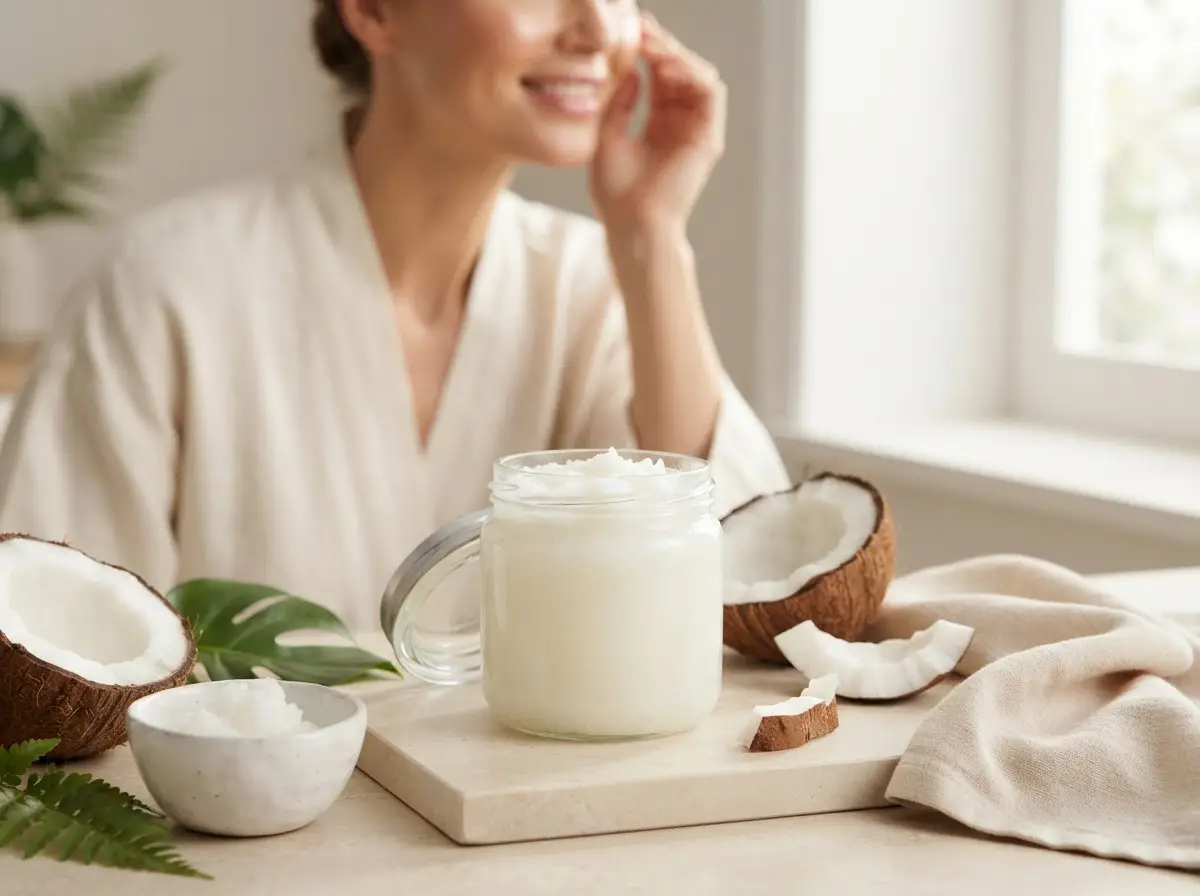
Deep Hydration and Skin Barrier Restoration
One of the primary beauty uses for coconut oil is intensive moisturization. Dry, flaking skin often results from a compromised skin barrier that allows moisture to escape (transepidermal water loss).
Coconut oil acts as an occlusive moisturizer. This means it creates a physical, protective seal over the skin’s surface, locking in hydration and environmental moisture.
How to Apply for Maximum Absorption:
-
Cleanse: Wash your face or body with a gentle, hydrating cleanser.
-
Damp Skin Application: Apply a pea-sized amount of virgin coconut oil while your skin is still slightly damp. This traps water molecules inside the epidermis.
-
Massage: Gently massage in upward circular motions for 60 seconds to stimulate microcirculation.
-
Blot: Allow 5 minutes for absorption, then gently blot any excess with a clean microfiber towel.
Unlocking Coconut Oil Hair Benefits for Damaged Tresses
Beyond facial and body care, maximizing beauty uses for coconut oil can completely revive dull, heat-damaged hair. Unlike many commercial hair serums that merely coat the hair shaft with temporary silicones, coconut oil has a unique low molecular weight. This allows it to penetrate deep into the hair cortex, preventing protein loss during washing and styling.
Comparative Analysis: Coconut Oil vs. Standard Commercial Conditioners
| Feature | Organic Coconut Oil | Standard Commercial Conditioner |
| Penetration Depth | Deep cortex penetration (reduces protein loss) | Surface-level coating (temporary slip) |
| Ingredient Purity | 100% natural, single-ingredient lipid | Synthetic silicones, sulfates, and artificial fragrances |
| Cost-Efficiency | High (multi-purpose, long-lasting jar) | Low to Medium (requires frequent repurchasing) |
| Scalp Compatibility | Natural antimicrobial properties | Can cause buildup or follicular irritation |
To harness these coconut oil hair benefits, use it as a pre-shampoo overnight mask once a week. Warm two tablespoons of oil between your palms, comb it evenly from mid-lengths to ends, and wash it out the next morning with a clarifying shampoo.

Natural Beauty Hacks: Gentle Makeup Removal
Harsh chemical makeup removers often strip the skin of its natural oils, leading to rebound oil production and irritation, particularly around the delicate eye area. One of the most effective natural beauty hacks is substituting your micellar water or wipes with pure coconut oil.
-
Dissolves Waterproof Makeup: The lipids in the oil effortlessly break down stubborn wax, pigment, and waterproof mascara without requiring aggressive tugging or pulling.
-
Nourishes Lashes: Regular application conditions eyelashes, reducing breakage.
Advanced DIY Beauty Routines for Exfoliation and Glow
Integrating specialized DIY beauty routines into your weekly schedule allows you to customize treatments based on your specific skin type and current environmental stressors. While store-bought scrubs often contain micro-plastics or abrasive synthetic beads, a homemade coconut oil scrub offers a simple approach to gentle exfoliation. For more ideas, explore these homemade body scrub recipes.
Step-by-Step Exfoliating Body Scrub Recipe:
-
Ingredients:
-
1/2 cup of organic virgin coconut oil (melted to room temperature)
-
1 cup of fine organic brown sugar or pure sea salt
-
1 tablespoon of raw organic honey (for added humectant properties)
-
3–5 drops of lavender or tea tree essential oil (optional for fragrance and antimicrobial support)
-
-
Instructions: Mix the ingredients in a clean glass bowl until a paste forms. Gently massage onto damp skin in circular motions during your shower, focusing on rough areas like elbows, knees, and heels, then rinse thoroughly with warm water.
Why This Routine Works:
The combination of physical exfoliation from the sugar crystals and deep lipid replenishment from the coconut oil ensures your skin is sloughed and moisturized simultaneously. This eliminates the chalky, ash-look associated with dry winter skin and prepares the epidermis to better absorb subsequent serums and lotions.
Tailoring Coconut Oil for Skin Types: Who Benefits Most?
A common misconception in modern skincare is that a single ingredient works identically for every individual. When evaluating beauty uses for coconut oil, dermatologists emphasize understanding your unique skin classification.
-
Dry and Dehydrated Skin: Highly compatible. The occlusive barrier reduces moisture loss overnight, making it a stellar treatment for chronically dry patches or eczema-prone areas.
-
Mature and Aging Skin: Highly beneficial. Rich fatty acids help plump the appearance of fine lines, while antioxidant compounds combat oxidative stress from UV exposure and pollution.
-
Oily or Acne-Prone Skin: Proceed with caution. Coconut oil sits at a rating of 4 out of 5 on the comedogenic scale, meaning it has a moderate-to-high probability of clogging pores for acne-prone complexions. If you have oily skin, restrict its use strictly to body care, lip treatments, or hair masks rather than full facial application.
Target Solutions: Lips, Cuticles, and Eyes
If you want immediate aesthetic upgrades with minimal effort, several micro-applications can be integrated into your morning and evening habits:
-
Overnight Lip Repair: Apply a thin layer of solid coconut oil onto chapped lips before bed to lock in moisture and heal micro-fissures by morning.
-
Cuticle Softener: Massage a dime-sized amount into your nail beds during a home manicure to soften hard skin and prevent painful hangnails.
-
Eyelash Conditioning: Gently tap a micro-amount along your lash line to condition brittle hairs and promote a naturally glossy finish.
For further reading on maintaining balanced skin integrity and managing professional dermatological treatments, you can explore clinical insights via the American Academy of Dermatology (AAD) Skin Care Resource Center.
The Science of Fatty Acids: Why Coconut Oil Works on a Molecular Level
To truly master the diverse beauty uses for coconut oil, it is essential to understand the biochemistry behind the jar. Unlike standard petroleum-derived moisturizers that merely sit on top of the stratum corneum, organic unrefined coconut oil is heavily saturated with medium-chain fatty acids (MCFAs).
Let’s break down the primary active components responsible for its legendary status:
-
Lauric Acid (approx. 49% – 53%): This is the crown jewel of coconut oil constituents. Lauric acid is a 12-carbon saturated fatty acid that converts into monolaurin in the presence of certain microorganisms. It possesses potent antimicrobial, antibacterial, and antifungal characteristics, making it exceptionally effective at neutralizing surface bacteria that contribute to body odor, folliculitis, or scalp irritation.
-
Caprylic and Capric Acid: These shorter-chain fatty acids provide rapid absorption capabilities. They act as natural emollients that soften coarse skin textures without leaving an uncomfortably sticky or heavy residue, provided the product is applied in appropriate quantities.
-
Vitamin E and Phytosterols: Acting as natural antioxidants, these compounds neutralize free radicals generated by urban pollution and ultraviolet radiation, supporting long-term cellular health and elasticity.
Scientific Comparison: Unrefined vs. Refined Coconut Oil
When purchasing products for your DIY beauty routines, the extraction method dictates the nutritional value of the oil.
| Feature | Virgin / Unrefined Coconut Oil | Refined Coconut Oil |
| Extraction Source | Fresh, raw coconut meat (wet-milled or cold-pressed) | Dried coconut meat (“copra”), bleached and deodorized |
| Nutrient Retention | Maximum natural antioxidants, fatty acids, and vitamin E | Significantly depleted due to high-heat chemical processing |
| Aroma and Flavor | Distinct, rich natural coconut scent and taste | Neutral, odorless, and tasteless |
| Best Suited For | Direct topical skin and hair applications | High-heat cooking or sensitive-nosed users |
For all cosmetic and beauty applications, unrefined virgin oil is universally recommended by holistic aestheticians because it preserves the full spectrum of active micronutrients.
Environmental and Seasonal Adaptations for Your Beauty Regimen
Your skin’s interaction with natural lipids changes drastically depending on the climate, humidity levels, and seasonal shifts. Mastering beauty uses for coconut oil requires understanding how to adapt your application techniques throughout the year:
-
Winter Routine Adjustments: During freezing winter months, indoor heating combined with frigid outdoor winds strips the skin’s natural hydrolipidic film. In this climate, coconut oil shines as an intensive body sealant. Apply it immediately after a warm bath while your skin is still wet to lock in maximum hydration. You can also mix a small dollop into your standard hand cream to prevent painful cracking around the knuckles.
-
Summer Routine Adjustments: High humidity and scorching temperatures can increase sebum production. During summer, heavy facial application of coconut oil should be avoided unless you have severely dry skin. Instead, pivot toward using it as a targeted post-sun body oil (to soothe tight, wind- or sun-exposed shoulders) or as a protective pre-swim hair mask to shield strands from chlorinated pool water or saltwater damage.
Common Mistakes to Avoid When Using Coconut Oil
Even seasoned beauty enthusiasts occasionally fall into traps that diminish the benefits of natural oils. Avoiding these common pitfalls ensures you reap only the positive rewards:
-
Over-Applying on the Face: A common error is slathering large quantities of oil onto facial skin. A little goes a long way. Using more than a pea-sized amount can suffocate the pores, resulting in closed comedones or breakouts.
-
Applying to Bone-Dry Skin: Occlusive oils do not add moisture; they trap existing moisture. Applying coconut oil to completely dry skin can actually dehydrate the tissue further. Always apply to damp skin or layer it over a water-based hyaluronic acid serum.
-
Ignoring Patch Testing: Just because a product is natural does not mean it is universally non-allergenic. Always perform a 24-hour patch test on the inner forearm before applying coconut oil to your face or sensitive areas.
Incorporating Coconut Oil into Hair Care: Advanced Treatments and Scalp Health
While we touched upon basic coconut oil hair benefits earlier, optimizing your hair regimen requires a specialized understanding of porosity, scalp microbiome health, and targeted treatments. Hair porosity dictates how well your hair absorbs and retains moisture, and coconut oil interacts uniquely with each hair type.
Understanding Hair Porosity and Coconut Oil Compatibility
-
Low Porosity Hair: Cuticles are tightly closed, making it difficult for moisture to penetrate. Because coconut oil has a high affinity for hair proteins, low porosity hair can sometimes feel stiff or brittle when treated with pure coconut oil due to protein overload. If you have low porosity hair, use coconut oil sparingly as a pre-shampoo treatment (left on for no more than 20 minutes) rather than an overnight leave-in.
-
High Porosity Hair: Cuticles are lifted or damaged due to heat styling, chemical coloring, or environmental wear. High porosity hair readily absorbs the fatty acids, making coconut oil an absolute game-changer for sealing gaps in the cuticle, reducing frizz, and restoring elasticity.
Targeted Scalp Massage Routine for Dry Scalp and Flakiness
A dry, flaky scalp is often mistaken for dandruff, but it is frequently just dry skin or product buildup. The antimicrobial properties of lauric acid make it an excellent medium for a soothing scalp massage.
-
Section Your Hair: Divide your dry or slightly damp hair into 4 to 6 sections using hair clips.
-
Warm the Oil: Take one tablespoon of virgin coconut oil and warm it between your palms until it liquifies.
-
Apply Directly to Roots: Using your fingertips (not your fingernails), gently massage the oil into your scalp using small circular motions. This stimulates blood flow to the hair follicles, promoting healthy growth.
-
Rest and Cleanse: Leave the treatment on for 30 minutes. Before wetting your hair, apply your shampoo directly to the oiled roots and massage it in to emulsify the oil, then rinse thoroughly. Follow with a second light shampoo if necessary.
Creating Holistic Self-Care Rituals: Combining Coconut Oil with Botanical Infusions
Elevating standard DIY beauty routines into luxurious spa-grade rituals involves blending coconut oil with other potent natural ingredients. Because coconut oil acts as an exceptional carrier oil, it readily absorbs fat-soluble vitamins and botanical extracts.
DIY Coconut and Chamomile Overnight Hand and Foot Treatment
During colder months, hands and feet bear the brunt of environmental exposure, leading to calluses, cracked heels, and ragged cuticles.
-
Ingredients:
-
1/2 cup organic virgin coconut oil
-
2 tablespoons of dried organic chamomile flowers (or the contents of 2 chamomile tea bags)
-
5 drops of vitamin E oil
-
-
Preparation and Application: Gently melt the coconut oil in a double boiler, stir in the chamomile flowers, and let it infuse on low heat for 30 minutes without boiling. Strain the oil through a fine cheesecloth into a clean glass jar, stir in the vitamin E oil, and let it solidify at room temperature. Massage a generous amount onto your hands and feet before bed, then slip on clean cotton gloves and socks overnight to lock in maximum repair.
Demystifying Common Myths Surrounding Coconut Oil in Modern Skincare
With countless trends circulating across social media and beauty blogs, misinformation regarding plant oils is widespread. Let’s address the most common misconceptions using empirical dermatological insights:
-
Myth 1: “Coconut oil provides natural SPF protection.”
-
Fact: While laboratory estimates suggest coconut oil has a nominal SPF of around 4 to 7 due to its natural composition, it is never a substitute for broad-spectrum sunscreen. Relying on coconut oil for sun protection will expose your skin to harmful UVA and UVB radiation, leading to premature aging and cellular damage. Always apply a certified SPF 30+ mineral sunscreen as the final step of your daytime routine.
-
-
Myth 2: “Natural ingredients cannot cause allergic reactions.”
-
Fact: Poison ivy and latex are entirely natural, yet highly allergenic. Similarly, individuals with specific tree nut or coconut sensitivities can experience contact dermatitis. Always prioritize patch testing, especially when introducing unrefined botanical oils to compromised skin barriers.
-
Frequently Asked Questions (FAQ)
Can I use coconut oil on my face every day?
For most skin types—especially those prone to congestion or acne—daily facial application of coconut oil is not recommended due to its high comedogenic rating (4/5). However, individuals with extremely dry or mature skin can use a tiny, pea-sized amount as an occasional sealing step at night. If you notice any closed comedones or breakouts, discontinue facial use immediately and restrict it to body care, lips, or hair masks.
Does coconut oil clog pores?
Yes, coconut oil is moderately to highly comedogenic. It creates a thick, occlusive barrier over the epidermis. While this is fantastic for sealing moisture into dry body skin or protecting split ends, it can trap sebum, dead skin cells, and bacteria inside facial pores, potentially leading to breakouts. Always perform a patch test when trying new DIY formulations.
How does coconut oil benefit hair health?
Coconut oil is unique because its low molecular weight allows it to penetrate deep into the hair shaft (the cortex), unlike surface-level silicones. This deep penetration significantly reduces protein loss during washing and heat styling, locks in moisture, tames frizz, and soothes dry scalps when massaged into the roots.
What is the best way to store coconut oil for beauty use?
To preserve the integrity of its natural fatty acids and vitamin E content, store your jar of organic virgin coconut oil in a cool, dry place away from direct sunlight. While refrigeration is not strictly necessary, keeping it sealed tightly prevents airborne dust and moisture contamination during your daily beauty uses for coconut oil.
Conclusion: Elevating Your Natural Beauty Regimen
Mastering the diverse beauty uses for coconut oil allows you to streamline your bathroom vanity while embracing a sustainable, plant-based approach to personal care. From deep hydration and restorative coconut oil hair benefits to targeted natural beauty hacks and custom DIY beauty routines, this versatile kitchen staple delivers exceptional results when used mindfully.
By understanding your skin porosity, respecting comedogenic limitations, and pairing your routine with complementary treatments like those found in our guides on Cicaplast vs Cicalfate and 11 beauty uses for apple cider vinegar, you can achieve a radiant, healthy glow naturally.
The My Beauty Box Review editorial team writes about DIY skincare, beauty subscription boxes and clean beauty. We link our sources and include safety notes. We are not dermatologists or cosmetic chemists.

