
The beauty uses for olive oil have a long history in Mediterranean personal care. Extra virgin olive oil contains fatty acids and antioxidant compounds, including polyphenols and vitamin E. However, its effects depend on how it is used, the formulation, and your individual skin and hair needs.
Olive oil can help soften dry hair, add temporary shine, and reduce moisture loss when used appropriately. However, it is not suitable for every skin type, and research does not support treating it as a universal solution for acne, skin barrier damage, or premature aging.
In this guide, we explore practical beauty uses for olive oil, simple DIY recipes, potential drawbacks, and precautions to consider before adding this kitchen staple to your beauty routine.
BeautyUsesforOliveOil:WhattheScienceSays
Extra virgin olive oil contains predominantly oleic acid, along with smaller amounts of other fatty acids, vitamin E, squalene, and phenolic compounds. These components contribute to the oil’s composition and antioxidant properties, but their presence does not automatically establish a specific benefit when olive oil is applied to the skin or hair.
Key Components of Extra Virgin Olive Oil
- Oleic acid: A monounsaturated fatty acid that makes up a substantial proportion of olive oil. Its effects on the skin depend on concentration, formulation, and individual skin condition.
- Squalene: A lipid also found naturally in human skin. Its presence in olive oil does not mean the oil will restore a damaged skin barrier.
- Polyphenols: Antioxidant compounds found in extra virgin olive oil. Evidence about their antioxidant activity should not be confused with proof that topical olive oil prevents wrinkles or reverses sun damage.
- Vitamin E: A fat-soluble antioxidant naturally present in olive oil. The amount varies, and applying olive oil is not equivalent to using a formulated vitamin E skincare product.
Olive oil may be useful as a conditioning ingredient in some personal care routines, but it is not a substitute for sunscreen, an acne treatment, or a moisturizer specifically formulated for a compromised skin barrier.
For guidance on choosing products for compromised or irritated skin, read our Skin Barrier Repair Guide.
How Olive Oil Compares With Other Beauty Oils
Different plant oils have different fatty acid profiles and cosmetic properties. Olive oil is rich in oleic acid, while jojoba oil has a different wax-ester composition and rosehip seed oil contains a higher proportion of polyunsaturated fatty acids.
These differences can affect texture and how a product feels on the skin, but they do not establish which oil is best for everyone. Comedogenic ratings are not reliable enough to predict an individual’s response to every oil or finished skincare formulation.
If you have acne-prone or easily irritated skin, introduce new products cautiously and consider a moisturizer formulated for your skin type.
The beauty uses for olive oil vary depending on the application, product quality, and individual skin and hair needs.
1. Olive Oil for Dry Skin: What to Know
Some beauty uses for olive oil focus on softening dry hair and conditioning the skin, but topical results vary from person to person.
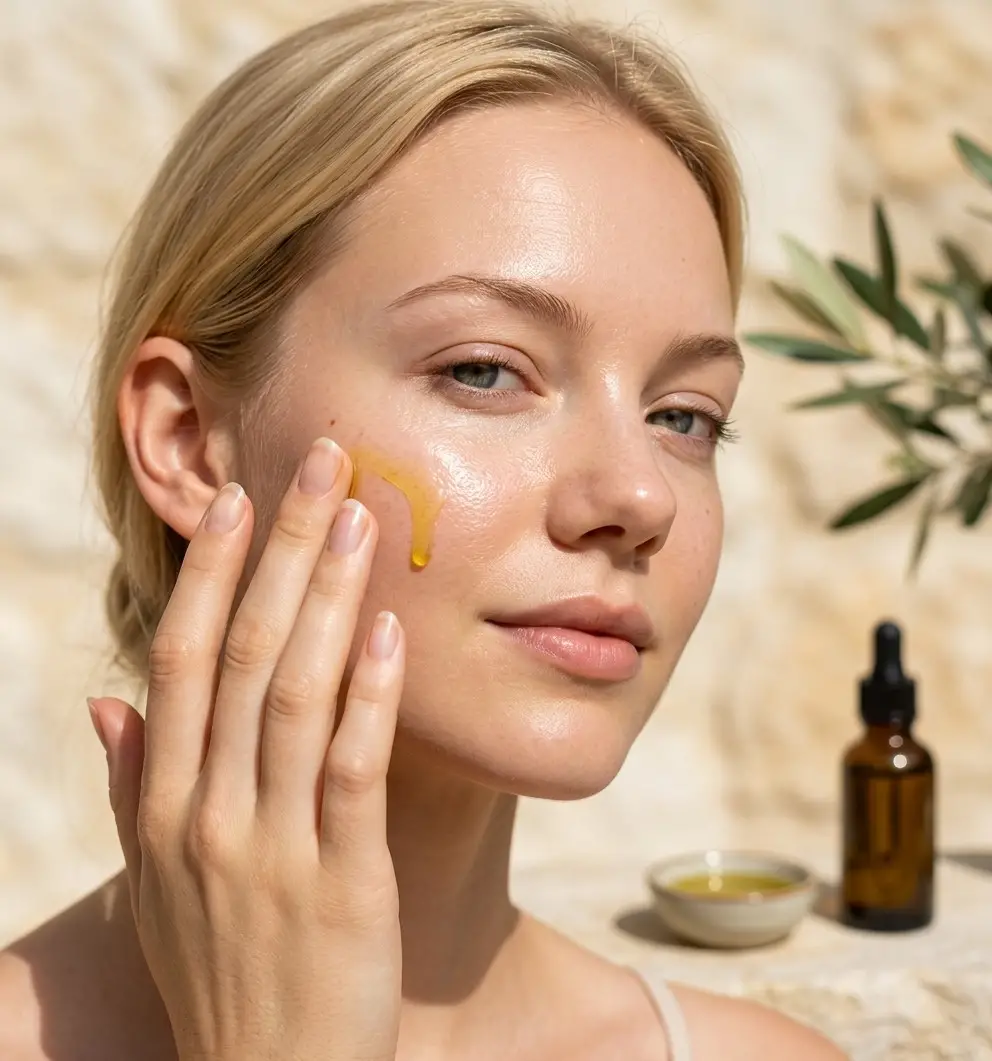
Olive oil is sometimes used in personal care to soften the skin, but it should not automatically be considered a treatment for dryness or a damaged skin barrier. Its high oleic acid content may affect skin differently depending on the individual and the frequency of application.
A small amount may feel conditioning on some areas of the skin, but olive oil can also cause irritation or be unsuitable for people with certain skin conditions. Research on topical olive oil has produced mixed findings, so a specially formulated moisturizer is generally a more predictable choice for persistent dryness.
If You Want to Try Olive Oil on a Small Area
- Choose a clean, intact area of skin away from the eyes.
- Apply a very small amount rather than coating the skin heavily.
- Monitor the area for redness, itching, burning, or new bumps.
- Stop using the oil if irritation develops.
Avoid experimenting with olive oil on inflamed, broken, or eczema-affected skin. If your skin barrier is compromised, consult a dermatologist or use a moisturizer designed for sensitive skin.
For more guidance, read our Skin Barrier Repair Guide.
2. DIY Olive Oil Face Mask: Safety and Alternatives
A homemade face mask containing olive oil may temporarily soften the skin, but results vary and there is limited evidence supporting specific olive oil mask recipes. Combining kitchen ingredients does not automatically make a skincare product safer or more effective.
Recipes containing yogurt, honey, eggs, or other perishable ingredients can introduce additional irritation or contamination risks. If you choose to experiment with a homemade mask, prepare only what you need for one application, avoid the eye area, and discard all leftovers immediately.
A Simpler Approach to Skin Softness
Rather than combining several kitchen ingredients, consider a fragrance-free moisturizer formulated for your skin type. If you prefer to experiment with olive oil, test a small amount on a limited area of intact skin first.
Do not apply homemade masks to broken, inflamed, or irritated skin. Stop immediately if you notice discomfort or a skin reaction.

3. Olive Oil Hair Treatment for Dry Hair and Shine
Olive oil can be used as a pre-wash conditioning treatment to help dry hair feel softer and look shinier. However, it does not permanently repair split ends or treat the underlying causes of dandruff, scalp inflammation, or hair loss.
The amount you use matters. Too much oil can weigh down fine hair and may make washing more difficult.
How to Use Olive Oil as a Pre-Wash Hair Treatment
What you need:
- A small amount of extra virgin olive oil
- A towel to protect your clothing
- Your regular shampoo
Instructions:
- Start with a small amount of oil, warmed between your palms. Do not heat it directly or apply hot oil to your scalp.
- Distribute it lightly through the mid-lengths and ends of dry hair.
- Leave it on for approximately 15–30 minutes if your hair tolerates the treatment.
- Wash thoroughly with shampoo and rinse well.
- Check how your hair feels after drying before deciding whether to repeat the treatment.
Use less oil if your hair is fine or easily weighed down. Avoid applying it to an irritated scalp, and do not use it as a treatment for persistent flaking or scalp disease.
4. Olive Oil Body Scrub: A Simple DIY Idea
Olive oil can be combined with a physical exfoliant to create a homemade body scrub. The oil gives the mixture a slippery texture, while sugar or salt provides the exfoliating particles. However, physical exfoliation can irritate the skin if the particles are too coarse or the mixture is rubbed too aggressively.
Simple Olive Oil and Sugar Body Scrub
Ingredients:
- 2 tablespoons of fine sugar
- 1 tablespoon of olive oil
Instructions:
- Mix the ingredients in a clean bowl immediately before use.
- Apply a small amount to damp skin on the body.
- Massage gently without applying pressure.
- Rinse thoroughly and pat the skin dry.
Avoid using this scrub on the face, broken skin, sunburn, irritated areas, or immediately after shaving. Do not use it if exfoliation causes discomfort.
Prepare only enough for one application and discard the remainder. Keep the mixture away from wet surfaces, where oil can make the floor slippery.
For more ideas, explore our 25 Homemade Body Scrub Recipes.
5. Olive Oil for Dry Cuticles and Nail Care
Frequent handwashing, dry weather, and repeated exposure to cleaning products can leave the skin around the nails feeling rough. A small amount of olive oil can help soften dry cuticles and make them feel more comfortable.
How to Use Olive Oil on Cuticles
- Place a drop of olive oil on each cuticle.
- Massage gently into the surrounding skin.
- Repeat occasionally as needed, provided your skin tolerates the oil.
- Avoid cutting or aggressively pushing back the cuticles, which help protect the area around the nail.
Olive oil is a conditioning option, not a proven treatment for nail infections or a method of accelerating nail growth. If the skin around a nail becomes swollen, painful, or increasingly red, seek appropriate medical advice.
6. Can Olive Oil Remove Eye Makeup?
Oils can help loosen some waterproof makeup because many makeup formulas contain oil-resistant waxes and other ingredients that are not easily removed with water alone. However, olive oil is not specifically formulated for the delicate eye area.
A dedicated eye makeup remover is generally a more predictable option, particularly for contact lens wearers or people with sensitive eyes.
Safer Makeup Removal Tips
- Choose a makeup remover labeled for use around the eyes.
- Follow the product’s instructions and avoid rubbing the eyelids aggressively.
- Keep oils and other skincare products out of the eyes.
- Stop using a product if it causes irritation, blurred vision, or discomfort.
Olive oil has not been established as a treatment for eyelash growth or as a proven method of strengthening lashes.
7. Reducing Friction During Shaving
Shaving can irritate the skin, particularly when there is insufficient lubrication or excessive pressure. A shaving gel or cream designed for the area being shaved is generally a more predictable choice than kitchen olive oil.
If you experiment with olive oil, use a small amount on intact skin and stop if you notice irritation or new bumps. Olive oil should not be presented as a proven way to prevent razor burn, ingrown hairs, folliculitis, or infection.
Safety Considerations: Who Should Be Careful With Olive Oil?
Olive oil is not suitable for every skin type. Although it is a familiar household ingredient, its effects on the skin can vary depending on the individual, the frequency of application, and the condition of the skin.
Acne-Prone and Easily Irritated Skin
If your skin is prone to clogged pores or breakouts, olive oil may not be the best choice for facial care. Comedogenic ratings cannot reliably predict how every individual will respond to a particular oil.
If you experience persistent acne, irritation, or recurring scalp symptoms, consider products formulated for your condition and seek advice from a dermatologist when needed.
Sensitive Skin and Eczema
Research on topical olive oil has produced mixed results. One controlled study in adults found reduced skin barrier integrity and mild redness following repeated application, while other research has reported different outcomes under different conditions. These findings do not establish olive oil as a universal treatment for dry or compromised skin.
Avoid experimenting with olive oil on inflamed or broken skin, and do not use it as a substitute for an eczema treatment recommended by a healthcare professional.
Babies and Newborns
Do not assume that a natural oil is automatically suitable for infant skin. Research on topical oils in newborns has identified potential effects on skin barrier development, and the evidence remains insufficient to recommend olive oil as a universal infant skincare product. Follow advice from a pediatric healthcare professional.
Patch Testing New Products
Before trying a new cosmetic product, apply it to a small area according to the product’s instructions and monitor for a reaction. A home patch test cannot guarantee that a product will be safe for every future use.
Stop using a product if you experience persistent redness, itching, burning, or swelling. Seek medical advice for a significant or persistent reaction.
How to Choose and Store Olive Oil for Beauty Use
If you decide to use olive oil in a personal care routine, pay attention to the product’s quality, packaging, storage conditions, and intended use.
What to Look For
- Product quality: Choose a clearly labeled product from a reputable producer. Extra virgin olive oil is a food-grade category, not a guarantee of suitability for every skin type.
- Packaging: Dark glass bottles and opaque containers can help protect olive oil from light exposure.
- Storage: Follow the manufacturer’s storage instructions and keep the bottle tightly closed, away from excessive heat and direct sunlight.
- Freshness: Check the best-before date and any available harvest information. Quality and shelf life depend on the product and storage conditions.
Avoid using oil that smells rancid or has clearly deteriorated. Do not assume that a more expensive or less processed oil will necessarily produce better cosmetic results. For facial care, a properly formulated skincare product may offer more predictable performance than kitchen olive oil.
Frequently Asked Questions About Olive Oil for Beauty
Can I leave extra virgin olive oil on my face overnight?
Olive oil may soften the skin, but it is not suitable for everyone. If you choose to try it, start with a small amount on a limited area of intact skin and monitor your skin’s response. Avoid it if you experience irritation or worsening breakouts.
Does olive oil darken eyelashes or eyebrows?
There is no established evidence that olive oil changes natural eyelash or eyebrow pigmentation or stimulates hair growth. Avoid applying it close to the eyes, where it may cause irritation.
How often should I use an olive oil hair treatment?
There is no universally established frequency. Start with an occasional pre-wash treatment on the hair lengths and ends, then adjust according to how your hair responds. Fine or oily hair may become weighed down by excess oil.
Will olive oil clog my pores?
Olive oil may not suit every skin type, particularly if you are prone to breakouts. Comedogenic ratings cannot reliably predict an individual’s response. If you have acne-prone skin, consider a moisturizer formulated for your skin type instead.
Final Verdict: Is Olive Oil Worth Adding to Your Beauty Routine?
Extra virgin olive oil is a versatile household ingredient with several potential cosmetic uses. It may help condition dry hair, add temporary shine, and soften cuticles. However, its effects on facial skin vary, and it should not be considered a proven treatment for acne, skin barrier damage, or premature aging.
If you decide to experiment with olive oil, use it sparingly, avoid irritated skin and the eye area, and pay attention to how your skin responds. People with persistent skin concerns may benefit more from a properly formulated skincare product or advice from a dermatologist.
Natural ingredients are not automatically safer or more effective than formulated products. The best beauty routine is one that suits your individual needs, uses realistic claims, and prioritizes skin health. The most practical beauty uses for olive oil include occasional hair conditioning and cuticle care. However, olive oil is not a proven treatment for acne, damaged skin barriers, or premature aging.

Lora Sokolov is a Lead Cosmetic Formulation Expert and skincare strategist at My Beauty Box Review, specializing in dermo-cosmetics, active ingredient analysis, and skin barrier recovery.

