
Wondering how often should you wash your hair? The answer depends on how quickly your scalp becomes oily, your hair texture, your lifestyle, and the products you use. Some people benefit from shampooing every day, while others can comfortably go several days or longer between washes.
The goal is to keep your scalp clean without unnecessarily drying out your hair lengths. Washing too infrequently can allow oil, sweat, dead skin cells, and styling products to accumulate, while harsh cleansing and rough handling can leave hair dry, frizzy, or prone to breakage.
In this guide, you’ll learn how to choose a washing schedule for your hair type, recognize when your routine needs adjusting, and build simple habits that support a comfortable, healthy-looking scalp.
Quick Answer: How Often Should You Wash Your Hair?
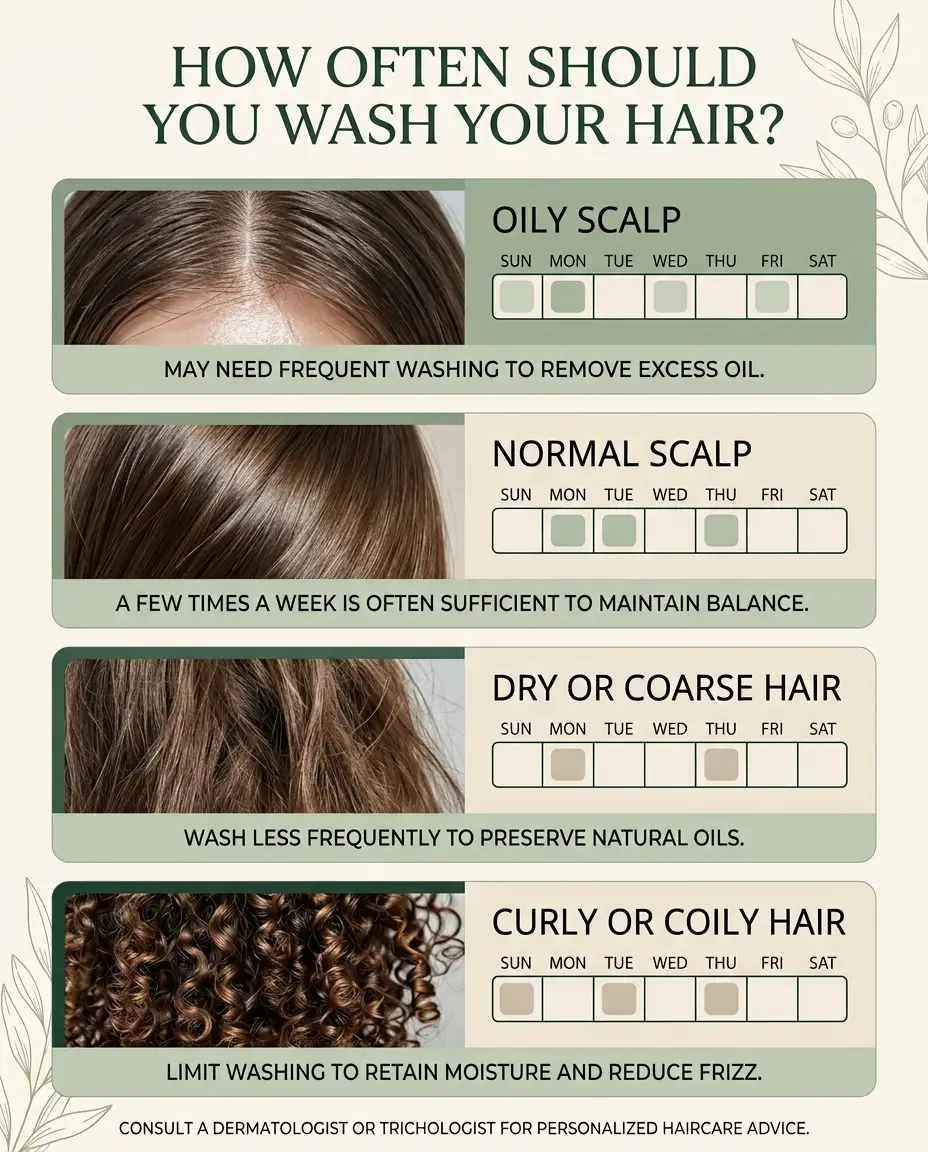
For most people, the best washing schedule is the one that keeps the scalp comfortable and reasonably free of excess oil and buildup.
| Hair type or scalp condition | Starting point | What to consider |
|---|---|---|
| Oily scalp or fine, straight hair | Daily or every other day, if needed | Fine hair can look greasy quickly, especially when the scalp produces excess oil. |
| Normal scalp and medium-textured hair | Every 2–3 days, if suitable | Adjust according to oiliness, activity, and scalp comfort. |
| Dry, thick, or coarse hair | Less frequently, as needed | Focus on gentle cleansing and conditioning to reduce dryness and breakage. |
| Curly or coily hair | According to scalp needs and hair texture | Longer intervals may help manage dryness, but the scalp still needs regular cleansing. |
| Color-treated or damaged hair | An individualized schedule | Balance scalp cleansing with gentle handling and color-care products. |
These are starting points, not strict rules. The American Academy of Dermatology (AAD) advises washing according to how quickly hair becomes dirty or oily. People with straight hair and an oily scalp may need daily shampooing, while dry, textured, curly, or thick hair may need less frequent washing.
Source: American Academy of Dermatology — Tips for Healthy Hair.
What Determines How Often You Should Wash Your Hair?
Your ideal washing frequency depends on several factors. Understanding them helps you create a routine that works for your scalp rather than following a schedule simply because it works for someone else.
1. Scalp Oil Production
The scalp contains sebaceous glands that produce sebum, a natural oil that helps lubricate the skin and hair.
If your scalp produces a lot of sebum, your roots may look shiny, greasy, or flat within a day of washing. If your scalp and hair are naturally dry, frequent cleansing with a harsh shampoo may make your lengths feel rough or brittle.
Pay attention to how your scalp feels between washes. If your roots become oily quickly, washing more frequently may be appropriate. If your hair feels dry or your scalp becomes uncomfortable, review your shampoo and technique rather than automatically increasing the number of washes.
Your washing schedule is only one part of maintaining a comfortable scalp. Read our guide to healthy scalp care for practical tips on gentle cleansing, managing product buildup, and recognizing common scalp concerns.
2. Hair Texture and Thickness
Hair texture affects how oil spreads along the hair shaft and how easily the lengths become dry or tangled.
- Fine, straight hair: Oil can become noticeable quickly, and even a small amount may weigh down the roots.
- Thick or coarse hair: The lengths may tolerate longer intervals between washes, depending on scalp oiliness.
- Wavy hair: Washing frequency depends on how oily the roots become and how dry the ends feel.
- Curly and coily hair: Natural oils may not travel as easily along the bends of the hair, so the lengths can become dry even when the scalp needs cleansing.
Remember that hair thickness and scalp oiliness are different characteristics. Thick hair can have an oily scalp, just as fine hair can have a dry scalp.
3. Exercise, Sweat, and Styling Products
Your lifestyle can influence how frequently you need to wash your hair.
Regular workouts, hot weather, helmets, and heavy styling products may leave your scalp feeling sweaty, oily, or coated with residue. If you exercise frequently, you may need to rinse your scalp or shampoo more often, depending on your hair texture and how much you sweat.
Dry shampoo can absorb some surface oil temporarily, but it does not replace washing when your scalp needs proper cleansing. If you regularly use styling creams, gels, sprays, or dry shampoo, make sure your normal washing routine removes accumulated residue.
4. Age and Changing Hair Needs
Hair and scalp needs can change over time. Hormonal changes, medications, environmental conditions, and changes in hair texture may affect oiliness and dryness.
Rather than assuming that your washing frequency should remain the same for years, reassess your routine when your scalp or hair starts behaving differently.
How Often Should You Wash Oily Hair?

If your roots become greasy quickly, you may be wondering how often should you wash oily hair without making the lengths dry or difficult to manage.
For an oily scalp, daily or alternate-day shampooing may be appropriate. The right frequency depends on how quickly oil accumulates and whether your shampoo leaves your scalp comfortable.
How to Manage an Oily Scalp
1. Choose a suitable shampoo.
Look for a shampoo formulated for your scalp’s needs. If your roots become oily quickly, a lightweight cleansing formula may work better than a rich product designed primarily for very dry hair.
2. Concentrate shampoo on the scalp.
Wet your hair thoroughly, then gently massage shampoo into your scalp with your fingertips. Avoid scratching with your nails or aggressively rubbing the lengths.
The purpose is to remove excess oil, sweat, and product residue from the scalp without causing unnecessary friction along the hair shaft.
3. Condition where your hair needs it.
Apply rinse-out conditioner mainly to the mid-lengths and ends if your roots become greasy easily. If your hair is curly, coarse, or particularly dry, you may benefit from conditioning more of the length.
4. Avoid unnecessary product layering.
Using several heavy styling products between washes can leave roots feeling coated. Use only the amount you need and cleanse when residue begins to affect your scalp or hair.
5. Don’t force yourself to wait longer between washes.
There is no need to tolerate uncomfortable oiliness simply to follow a less-frequent washing routine. Likewise, washing more often is not automatically damaging if you use a suitable shampoo and handle your hair gently.
How Often Should You Wash Curly Hair?
If you have curls or coils, the question how often should you wash curly hair requires balancing scalp cleanliness with the tendency of textured hair to become dry and tangled.
Curly hair often benefits from a gentler approach because repeated friction, rough towel drying, and inadequate conditioning can contribute to breakage. However, there is no single washing interval that works for every curl pattern.
Building a Routine for Curly and Coily Hair
Choose a schedule based on your scalp. If your scalp feels comfortable and your hair is not accumulating excessive oil or residue, you may be able to leave longer intervals between shampoo sessions. If your scalp becomes itchy, greasy, or uncomfortable, reassess your routine.
Use a gentle shampoo when appropriate. A formula designed for curly or dry hair may help reduce the feeling of dryness after cleansing. Sulfate-free products are one option, but the overall formulation and how your hair responds matter more than a single ingredient label.
Condition thoroughly. Conditioner helps improve slip, reduce tangling, and make textured hair easier to manage. Apply it according to your hair’s needs and the product directions.
Detangle gently. Use your fingers or a wide-tooth comb, working carefully through sections. Avoid pulling aggressively through knots, particularly when the hair is wet and more vulnerable to mechanical damage.
Adjust after sweating or swimming. Sweat, pool chemicals, and styling products may require additional rinsing or cleansing. Follow up with suitable conditioning when needed.
For more guidance, the AAD provides hair-care recommendations for different textures.
How to Tell If You’re Washing Your Hair Too Often or Not Often Enough
Your scalp and hair can provide useful clues when your routine needs adjusting. Look at several signs together rather than relying on a single symptom.
Signs Your Routine May Be Too Harsh
- Dry, brittle lengths: Your hair feels rough or breaks easily, particularly after washing and styling.
- Increased tangling: Your lengths are harder to detangle than usual.
- Scalp discomfort: Your scalp feels tight, irritated, or unusually dry after cleansing.
- Color fading or dullness: Your hair color appears to fade more quickly, particularly if you use hot water or products that are not suited to color-treated hair.
These signs do not automatically mean that you wash too often. Harsh products, heat styling, chemical treatments, and rough handling can also contribute.
Consider switching to a gentler shampoo, improving conditioning, and reducing friction. If irritation persists, seek advice from a dermatologist.
Signs You May Need to Wash More Frequently
- Greasy roots: Excess oil becomes visible or makes your hair feel heavy.
- Noticeable product residue: Styling products accumulate and leave your hair coated.
- Sweat and discomfort: Your scalp feels unpleasant after exercise or prolonged use of headwear.
- Persistent flakes or itching: These symptoms may indicate that your routine needs adjusting, but dandruff and other scalp conditions can also be responsible.
If you experience persistent itching, redness, scaling, or unusual hair shedding, do not assume that washing more often will solve the problem. A dermatologist can help identify the cause.
5 Essential Tips for Washing Your Hair Properly
Finding the right frequency is only part of an effective hair-care routine. How you wash and handle your hair also matters.
1. Shampoo the Scalp, Not Just the Hair Length
Wet your hair thoroughly and apply shampoo to the scalp. Massage gently with your fingertips to loosen oil and residue.
Let the shampoo rinse through the lengths instead of scrubbing them aggressively. This helps focus cleansing where it is most needed while limiting unnecessary friction.
2. Use Conditioner After Shampooing
Conditioner helps improve manageability, reduce tangling, and make hair easier to comb.
If your hair is fine or straight, concentrate on the mid-lengths and ends. If it is dry, curly, or coarse, you may need conditioning along more of the hair length.
Choose a formula that suits your texture and follow the instructions on the product.
3. Use Comfortable Water Temperature
Warm water is generally suitable for washing your hair. Very hot water may aggravate dryness or discomfort for some people.
Rinse thoroughly to remove shampoo and conditioner residue. You do not need an ice-cold final rinse to make your hair clean.
4. Handle Wet Hair Gently
Wet hair can be vulnerable to stretching and mechanical damage, especially when tangled.
Use a soft towel or a clean T-shirt to absorb excess water without vigorous rubbing. Detangle carefully with your fingers or a wide-tooth comb, starting near the ends and working upward.
If you use a hair dryer, choose a moderate temperature and avoid holding it too close to your hair.
5. Use Dry Shampoo as a Temporary Option
Dry shampoo can absorb some excess oil and help your roots look fresher between washes.
Apply it according to the label directions and avoid repeatedly layering it without regular cleansing. If your scalp becomes itchy, irritated, or coated with residue, stop using the product and wash your hair as appropriate.
Dry shampoo is a styling aid, not a substitute for shampoo and water when your scalp needs cleaning.
Frequently Asked Questions
How often should I wash my hair if I have a normal scalp?
If your scalp is neither particularly oily nor persistently dry, you might start by washing every two or three days and adjust according to how your hair responds. Your preferred frequency may change with exercise, weather, styling products, or hormonal changes.
Is it bad to wash your hair every day?
Not necessarily. Daily shampooing can be suitable for people with an oily scalp, especially when their hair is fine or straight. The important considerations are the shampoo’s formulation, scalp comfort, and whether the lengths become dry or damaged.
If daily washing leaves your hair brittle or your scalp irritated, consider a gentler formula or a different routine.
Should I wash my hair after every workout?
Not always. If you sweat heavily or your scalp feels oily and uncomfortable, washing may be appropriate. After a lighter workout, rinsing may be enough for some people, depending on their scalp and hair type.
If you swim in a pool, rinse your hair to remove pool chemicals and follow with suitable conditioning.
Can I train my hair to produce less oil by washing it less often?
There is no good reason to assume that deliberately leaving your scalp oily will permanently reduce its natural oil production. Sebum production is influenced by factors including hormones and individual biology.
You can adjust your routine for comfort and hair condition, but you do not need to endure greasy roots to train your scalp.
Can dry shampoo replace regular shampoo?
No. Dry shampoo absorbs some oil but does not provide the same cleansing as washing with shampoo and water. It can be useful between washes, but regular cleansing remains important for removing accumulated oil, sweat, dead skin cells, and product residue.
What should I do if my scalp is itchy or flaky?
Itching and flakes can have several causes, including dandruff, irritation from hair products, and other scalp conditions. Consider whether a new product may be contributing, and avoid scratching or applying potentially irritating homemade treatments.
If symptoms persist, worsen, or occur alongside redness or unusual hair loss, consult a dermatologist. The AAD offers additional guidance on how to treat dandruff.
Conclusion: Find the Right Hair-Washing Schedule for You
The answer to how often should you wash your hair depends on your scalp, hair texture, lifestyle, and the products you use. An oily scalp may need frequent cleansing, while dry, curly, or coarse hair may benefit from longer intervals and more conditioning.
Start by observing how quickly your roots become oily, whether your scalp feels comfortable, and how your lengths respond to shampooing. Make small adjustments rather than following a rigid schedule, and seek professional advice if persistent scalp symptoms develop.
Healthy-looking hair starts with a clean, comfortable scalp and gentle, consistent care. The best routine is one that meets your scalp’s needs while helping protect your hair from avoidable dryness and breakage.

Lora Sokolov is a Lead Cosmetic Formulation Expert and skincare strategist at My Beauty Box Review, specializing in dermo-cosmetics, active ingredient analysis, and skin barrier recovery.