
Achieving healthy scalp care starts with understanding that your scalp is skin and deserves the same thoughtful attention as the rest of your body. While many hair care routines focus on conditioning the lengths and styling the ends, a comfortable, well-cared-for scalp is an important part of maintaining healthy-looking hair.
Scalp concerns such as itching, flaking, excess oil, and irritation can have several causes. Sometimes, adjusting your shampoo or washing habits is enough to improve comfort. In other cases, persistent symptoms may require a dermatologist’s advice.
Fortunately, learning how to keep your scalp healthy does not require an expensive collection of products. A consistent routine built around gentle cleansing, suitable hair care products, and attention to changes in your scalp can make a meaningful difference.
In this guide, you will discover seven practical healthy scalp tips, learn how to choose products for your scalp type, and understand when common scalp concerns may need professional attention.
Healthy Scalp vs. Unhealthy Scalp: Quick Comparison
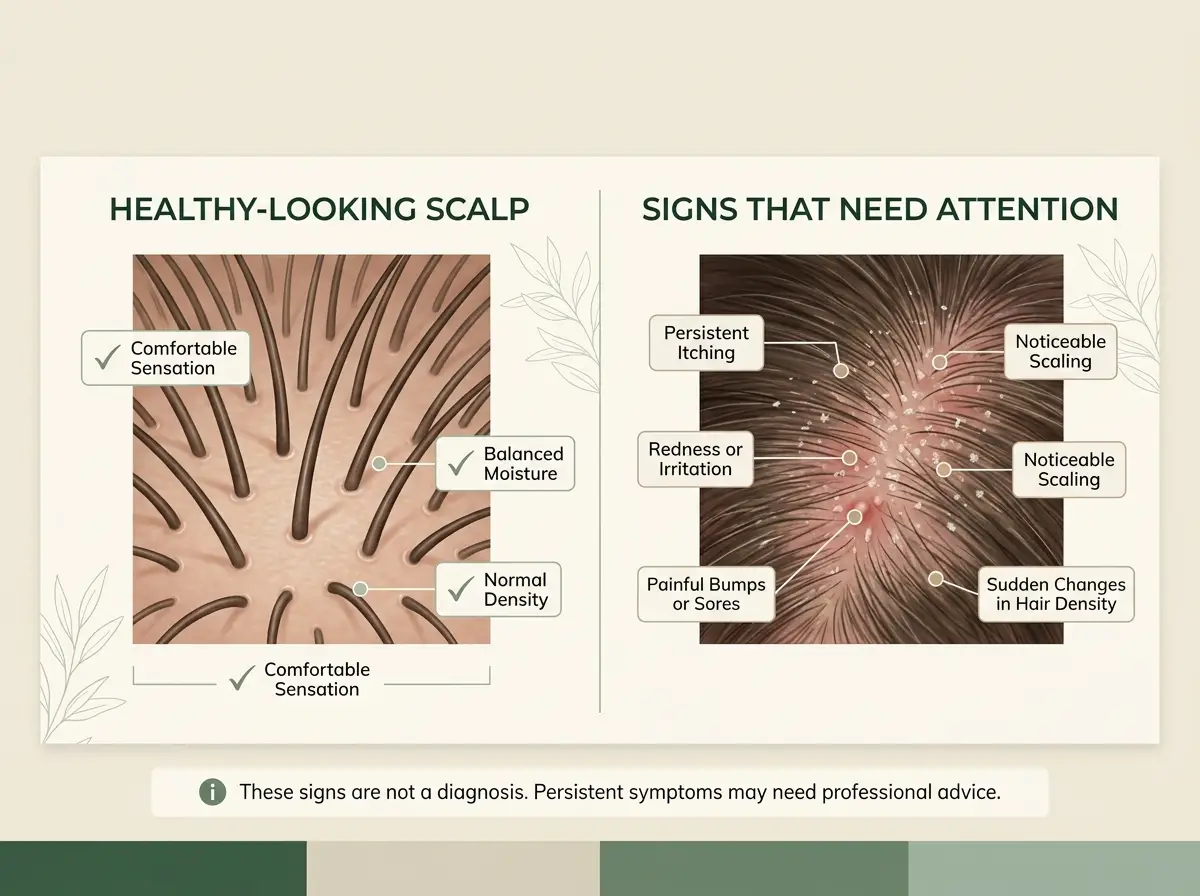
Understanding how to take care of your scalp begins with noticing how it looks and feels. Although no checklist can diagnose a skin condition, these general signs can help you decide whether your current routine is working for you.
| Scalp Indicator | Signs of a Comfortable Scalp | Signs That May Need Attention |
|---|---|---|
| Skin appearance | No persistent redness, sores, or unusual scaling | Ongoing redness, thick scales, crusts, or sores |
| Sensation | Little or no persistent discomfort | Frequent itching, burning, tenderness, or pain |
| Oil production | Oiliness that suits your hair type and washing schedule | Persistent excess oil or discomfort associated with buildup |
| Flaking | Little or no noticeable flaking | Persistent flakes, especially with redness or itching |
| Hair density | No sudden or unexplained changes | Noticeable thinning, patchy hair loss, or increased shedding |
Occasional flakes or oily roots do not automatically mean that something is wrong. Scalp symptoms can overlap, and conditions such as dandruff, eczema, psoriasis, and reactions to hair products may look similar.
Why Scalp Health Matters for Hair
Each hair grows from a follicle located within the skin. The scalp also contains sebaceous glands, which produce sebum to help lubricate the skin and hair, as well as a community of microorganisms that naturally live on the skin.
Maintaining a suitable cleansing routine helps remove excess oil, sweat, dead skin cells, and styling product residue. However, more cleansing is not always better: harsh products or unnecessary scrubbing can irritate the scalp, while infrequent washing may allow oil and product residue to accumulate.
Dandruff is associated with several factors, including the skin’s response to a naturally occurring yeast called Malassezia. It is not simply a sign of poor hygiene, and it cannot always be resolved with ordinary shampoo.
If you are unsure how frequently to wash your hair, start with our guide to how often should you wash your hair. It explains how scalp oiliness, hair texture, and lifestyle can influence your washing schedule.
7 Proven Healthy Scalp Tips for a Better Routine
You do not need to follow every hair care trend to build an effective scalp care routine. Start with these seven practical habits and adjust them according to your scalp’s needs.
1. Choose a Gentle Shampoo That Suits Your Scalp
The best shampoo is one that cleans your scalp effectively without leaving it persistently dry, tight, or irritated.
Sulfates are cleansing ingredients used in many shampoos. They are not automatically harmful, although some formulations may feel too drying for certain people. If your scalp is sensitive, you may prefer a gentler or fragrance-free formula.
When choosing a shampoo:
- Consider whether your scalp tends to be oily, dry, or sensitive.
- Look for products formulated for your hair type and scalp concerns.
- Rinse thoroughly to remove shampoo residue.
- Stop using a product if it repeatedly causes itching, burning, or redness.
You do not necessarily need a sulfate-free shampoo. Focus on how a product performs and how your scalp responds to it.
2. Cleanse Your Scalp Without Scratching
During shampooing, use the soft pads of your fingertips rather than your fingernails. Gently massage the shampoo across your scalp to remove oil, sweat, and product residue.
Avoid vigorous scrubbing, which can irritate the skin and contribute to hair breakage. A silicone scalp massager is optional, not essential; if you use one, choose a soft design and apply light pressure.
Rinse thoroughly, particularly around the hairline, behind the ears, and at the nape of the neck. Leftover product can contribute to discomfort in some people.

3. Wash According to Your Scalp Type
There is no single washing schedule that works for everyone. The right frequency depends on oil production, hair texture, exercise, styling products, and personal comfort.
People with fine hair or oily scalps may need more frequent washing, while people with dry, curly, or tightly coiled hair may prefer less frequent washing to help manage dryness and breakage.
Avoid forcing your hair into a fixed schedule simply because a trend recommends washing once a week or less. If your scalp becomes uncomfortable or visibly oily, adjust your routine.
4. Manage Product Buildup Without Over-Exfoliating
Styling creams, gels, dry shampoo, and some hair oils can leave residue when used frequently. Thorough shampooing is often the first step in managing this buildup.
If residue remains, a clarifying shampoo may be useful occasionally, provided it suits your scalp and hair type. Follow the product instructions and use conditioner where your hair needs it.
Scalp scrubs and exfoliating acids, such as salicylic acid, are not necessary for everyone. Overuse may worsen dryness or irritation. If you have persistent scaling, painful bumps, or an inflamed scalp, avoid aggressive exfoliation and seek professional advice.
5. Support Your Skin With a Balanced Diet
Healthy hair and skin depend on adequate nutrition. A varied diet that provides sufficient energy, protein, essential fats, vitamins, and minerals supports general health.
Useful food choices include:
- Omega-3 sources: Fatty fish, walnuts, chia seeds, and flaxseeds.
- Protein sources: Eggs, fish, poultry, beans, lentils, and tofu.
- Iron sources: Meat, lentils, beans, and fortified foods.
- Fruit and vegetables: A variety of colorful produce for vitamins and other nutrients.
However, eating particular foods does not guarantee faster hair growth or prevent scalp conditions. Supplements are not automatically beneficial, and excessive intake of certain nutrients can be harmful. If you suspect a deficiency or experience unexplained hair loss, speak with a healthcare professional before starting supplements.
6. Protect Your Scalp From Sun Exposure and Excessive Heat
The scalp can experience sunburn, particularly along the hair parting or in areas where hair is thinning. When spending extended time outdoors, seek shade and wear a protective hat. If the scalp is exposed, use a broad-spectrum sunscreen with SPF 30 or higher that is suitable for the area.
Heat styling can also damage hair and irritate the scalp if tools are used too close to the skin. Use appropriate temperature settings, avoid direct contact between hot tools and the scalp, and follow the manufacturer’s safety instructions.
If a hair dye, bleach, or styling treatment causes burning or significant irritation, stop using it and follow the product’s safety guidance. Do not assume that persistent burning is a normal part of the process.
7. Pay Attention to Changes in Your Scalp
Your scalp may respond differently to seasonal weather, changes in products, sweating, and styling habits. Notice patterns rather than automatically adding more treatments.
For example, if itching begins after introducing a new shampoo, styling product, or hair dye, stop using the suspected product and see whether the irritation improves. If symptoms persist or become severe, seek medical advice.
Avoid scratching repeatedly, picking at flakes, or applying several new treatments at once. These habits can make it harder to identify the cause of irritation.
How to Choose a Scalp Care Routine for Your Scalp Type
The most useful scalp care routine is one that responds to your scalp’s actual needs rather than following a universal list of products.
| Scalp Type or Concern | What You May Notice | A Practical Approach |
|---|---|---|
| Oily scalp | Roots become greasy relatively quickly | Wash as needed with a shampoo that removes excess oil without causing irritation |
| Dry scalp | Tightness, dryness, or fine flakes | Try a gentle, non-medicated shampoo and avoid products that worsen dryness |
| Flaky, itchy scalp | Persistent flakes and itching | Consider an appropriate anti-dandruff shampoo and follow the label directions |
| Sensitive scalp | Burning, redness, or discomfort after using products | Simplify your routine and consider fragrance-free products |
| Product buildup | Residue or heavy-feeling roots | Shampoo thoroughly and use a clarifying product when appropriate |
These descriptions are general guidance, not a diagnosis. Dry scalp and dandruff can have overlapping symptoms, and the right approach depends on the cause.
Common Scalp Problems and What May Help
Dry Scalp vs. Dandruff
Dry scalp and dandruff can both cause itching and flakes, so it is not always possible to distinguish them by appearance alone.
A dry scalp may feel tight or uncomfortable, particularly after washing or exposure to dry weather. Dandruff commonly causes visible flakes and itching and may be associated with seborrheic dermatitis.
For a dry scalp, try switching to a gentle, non-medicated shampoo and avoiding products that worsen irritation. For dandruff, an over-the-counter anti-dandruff shampoo may help.
Depending on the formulation, anti-dandruff shampoos may contain ingredients such as ketoconazole, selenium sulfide, salicylic acid, or other active ingredients. Zinc pyrithione is available in some markets, but permitted ingredients and product availability vary by country.
Follow the instructions on the product label, including how long to leave the shampoo on your scalp. If symptoms persist despite appropriate use, a healthcare professional can help identify the cause.
Oily Scalp With Dry Hair Lengths
It is possible to have oily roots and dry or brittle lengths at the same time. Hair texture, length, chemical treatments, heat styling, and the distribution of natural oils can all affect how your hair feels.
To manage this combination:
- Focus shampoo on the scalp rather than repeatedly scrubbing the lengths.
- Use conditioner on the areas that need it, following the product directions.
- Limit excessive heat styling and use a suitable heat protectant.
- Avoid adding heavy oils to your scalp if they make it feel uncomfortable or leave persistent residue.
You do not need to avoid all oils or rich conditioners. Choose products based on how your scalp and hair respond.
Scalp Bumps and Irritation
Small bumps, pimples, or sore areas can have different causes, including inflammation around hair follicles, irritation from hair products, or certain skin conditions.
Avoid squeezing bumps, scratching the area, or applying strong exfoliants without knowing what is causing the problem. Keep your routine simple and stop using products that appear to trigger irritation.
Seek medical advice if the bumps are painful, spreading, recurrent, or accompanied by pus, crusting, or significant redness.
Sensitive or Itchy Scalp
An itchy scalp can be caused by dandruff, eczema, psoriasis, contact dermatitis, or other conditions. Hair dyes, fragrances, essential oils, and styling products can trigger irritation or allergic reactions in some people.
If you suspect a product is responsible, stop using it and simplify your routine. Fragrance-free products may be worth considering if you are sensitive to fragrances, but no ingredient is guaranteed to suit everyone.
Persistent itching, burning, swelling, or soreness deserves attention rather than repeated experimentation with home remedies.
Ingredients to Look For in Scalp Care Products
Reading product labels can help you choose suitable products, but an ingredient’s presence does not guarantee that a product will work for every scalp.
Ingredients That May Be Useful
- Salicylic acid: Used in some scalp products to loosen and remove scales. It can also cause dryness or irritation, so follow the product instructions.
- Ketoconazole: An antifungal ingredient found in some anti-dandruff shampoos.
- Selenium sulfide: Used in certain products to help manage dandruff.
- Glycerin: A humectant that helps attract and retain moisture in skin and hair formulations.
- Colloidal oatmeal: Used in some products designed to soothe dry or irritated skin.
- Fragrance-free formulations: May be a useful option for people who react to fragrance ingredients.
Ingredients and Products to Use With Care
No single ingredient list is universally right or wrong for everyone. Consider how your scalp responds to the finished product.
- Fragrances and essential oils: Can trigger irritation or allergic contact dermatitis in some people.
- Strong exfoliating products: May worsen irritation if overused or applied to an already inflamed scalp.
- Heavy styling products: May leave unwanted residue for some users, especially when not washed out thoroughly.
- Drying or irritating formulations: Can be uncomfortable for sensitive skin, depending on the ingredients and their concentration.
Sulfates and silicones do not automatically need to be avoided. Their effects depend on the specific formulation, how the product is used, and your individual needs.
Simple Daily and Weekly Scalp Care Routine
A consistent routine does not have to involve numerous products or treatments. Start with the basics and make adjustments only when necessary.
On Wash Days
- Wet your scalp and hair thoroughly.
- Apply shampoo to your scalp and massage gently with your fingertips.
- Rinse thoroughly to remove residue.
- Apply conditioner where your hair needs it, following the product directions.
- Dry your hair gently, avoiding vigorous towel rubbing and excessive heat.
Between Washes
- Avoid scratching your scalp or picking at flakes.
- Use styling products in moderation if they leave residue.
- Clean hair brushes and styling tools regularly.
- If you use dry shampoo, remember that it absorbs oil but does not replace washing with shampoo and water.
Weekly or When Needed
Review how your scalp feels rather than automatically adding a scrub or treatment every week. If your current routine leaves your scalp comfortable and clean, you may not need extra steps.
If you have a diagnosed scalp condition, follow the treatment plan recommended by your healthcare professional.
Lifestyle, Stress, and Scalp Health
Stress, sleep, nutrition, and general health can influence the body, including skin and hair. However, they do not explain every scalp symptom, and improving lifestyle habits is not a substitute for treating a skin condition.
Try to maintain regular sleep, eat a varied diet, stay hydrated according to your needs, and use strategies that help you manage stress.
Persistent or sudden hair shedding can have several causes, including illness, medication changes, nutritional deficiencies, hormonal factors, and inherited conditions. If you notice unexplained shedding or visible thinning, seek medical advice rather than relying only on scalp products.
When Should You See a Dermatologist About Your Scalp?
A simple scalp care routine can help maintain comfort, but not every scalp problem can be resolved with cosmetic products.
Consider consulting a healthcare professional or dermatologist if you experience:
- Persistent itching, redness, burning, or swelling.
- Severe or recurring flakes that do not improve with appropriate treatment.
- Painful bumps, sores, crusting, or possible signs of infection.
- Sudden or noticeable hair shedding, thinning, or patches of hair loss.
- A rash or irritation that develops after using a hair dye or another hair care product.
- Symptoms that continue to worsen despite simplifying your routine.
Some conditions, including scalp psoriasis, eczema, seborrheic dermatitis, and fungal infections, may require specific treatment. A professional assessment can help distinguish between them and guide appropriate care.
Frequently Asked Questions About Healthy Scalp Care
What are the main signs of an unhealthy scalp?
Persistent itching, redness, burning, unusual scaling, painful bumps, sores, and noticeable changes in hair density may indicate a scalp problem. Occasional oiliness or a few flakes do not necessarily mean that your scalp is unhealthy.
How often should I wash my scalp?
Wash according to how quickly your scalp becomes oily or dirty, your hair texture, your lifestyle, and your scalp’s tolerance. People with oily scalps may need more frequent washing, while people with dry or tightly curled hair may prefer a less frequent schedule.
Can a dry scalp cause hair loss?
Dryness alone does not necessarily cause hair loss. However, persistent inflammation or repeated scratching can damage the skin or hair shafts, and some scalp conditions can be associated with temporary or permanent hair loss. If you notice significant shedding or patches of thinning, consult a healthcare professional.
Should I exfoliate my scalp every week?
Not necessarily. Some people may benefit from a suitable exfoliating product, but regular scrubbing is not essential for everyone. Excessive exfoliation can irritate the scalp. If you have persistent flakes or inflammation, choose an appropriate treatment instead of assuming that more scrubbing will help.
How can I tell the difference between dandruff and a dry scalp?
Both conditions can cause flakes and itching, and their symptoms may overlap. Dandruff may be associated with seborrheic dermatitis, while a dry scalp may relate to skin dryness or irritating products. If symptoms persist or you are unsure what is causing them, a dermatologist can help.
Can stress affect scalp health?
Stress may contribute to some skin symptoms and can be associated with certain types of hair shedding. However, it does not explain every case of scalp discomfort or hair loss. Persistent symptoms should be assessed according to their cause.
Are natural scalp care products always better?
No. Natural ingredients can still cause irritation or allergic reactions. Choose products according to your scalp’s needs, check their directions, and discontinue use if they cause persistent discomfort.
Conclusion: Build a Healthy Scalp Care Routine That Works for You
Learning how to take care of your scalp begins with simple, consistent habits rather than complicated treatments. Gentle cleansing, appropriate products, careful handling, and protection from excessive sun and heat can help maintain a comfortable scalp and support healthy-looking hair.
Start by choosing a shampoo that suits your scalp, washing as often as needed, rinsing products thoroughly, and avoiding unnecessary scrubbing or irritating home remedies. Pay attention to changes instead of assuming that every symptom requires another product.
Most importantly, remember that persistent itching, inflammation, scaling, or hair loss may need professional attention. A thoughtful scalp care routine can support everyday scalp health, while identifying and treating an underlying condition is often the key to resolving ongoing problems.
Sources
For additional information about scalp health and evidence-based hair care, consult these dermatology resources:
- American Academy of Dermatology: Everyday Scalp Care
- American Academy of Dermatology: How to Treat Dandruff
- American Academy of Dermatology: Is Your Dry Scalp Something More Serious?
- NHS: Dandruff

Lora Sokolov is a Lead Cosmetic Formulation Expert and skincare strategist at My Beauty Box Review, specializing in dermo-cosmetics, active ingredient analysis, and skin barrier recovery.